توقّع عقد شراء فيلا جديدة في دبي هيلز. يذكر الكتيّب أنها «جاهزة للمنزل الذكي». وتنص كراسة شروط المطوّر على نظام KNX. تبحث عن الاسم فلا تجد متجرًا رئيسيًا، ولا حدث إطلاق برّاقًا، ولا سفيرًا من المشاهير، بل مجرد منظمة بلجيكية غير ربحية، وبضع مئات من الشركات المصنّعة، وأداة برمجية تُسمّى ETS لم يسمع بها أحد خارج القطاع.
وهذا تحديدًا هو ما يُفترض أن يكون عليه الأمر.
نظام KNX هو المعيار المفتوح الأوسع اعتمادًا في العالم لأتمتة المباني السكنية والتجارية، وهو شبه خفيّ عن المشتري العادي في الإمارات. جزء من ذلك مقصود بالتصميم. فـ KNX لا يُعلن لأصحاب المنازل. لا يوجد ملصق «KNX Inside» على مفاتيح الإضاءة لديك. إنه معيار تقني هادئ تدعمه مئات الشركات المصنّعة، وشبكة حوكمة عالمية، وثلاثة عقود من القاعدة المُركّبة. هذه المقالة خريطة لتلك المنظومة: مَن يفعل ماذا، ولماذا يهمّ ذلك حين تكون على وشك إنفاق مبلغ كبير على منزل ذكي.
ما هو KNX فعليًا
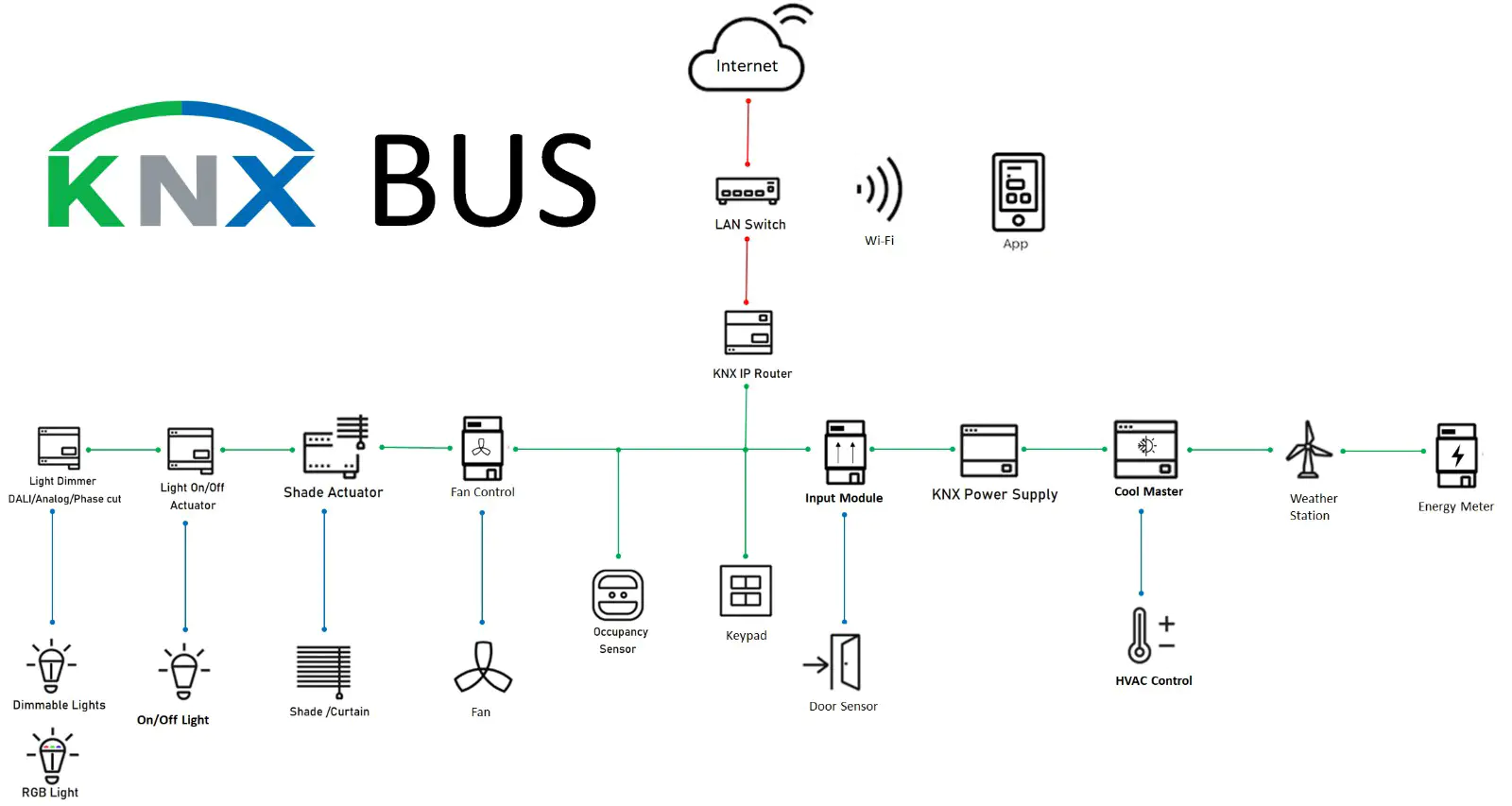
KNX هو بروتوكول مفتوح لأتمتة المباني، مُعرَّف بموجب المعيار الدولي ISO/IEC 14543-3. وهو معترف به أيضًا كمعيار أوروبي (EN 50090)، ومعيار أمريكي (ANSI/ASHRAE 135)، ومعيار صيني (GB/T 20965). إذا نزعنا الاختصارات جانبًا، فما تبقّى هو ناقل اتصال يتيح لأجهزة من شركات مصنّعة مختلفة أن تتحدث اللغة نفسها: يمكن لمفتاح من علامة تجارية أن يخفت مشغّل إضاءة من علامة أخرى، وأن يُشغّل مشغّل تظليل من علامة ثالثة، وكلها تتشارك الكابل المجدول ذاته.
إنه معيار، وليس علامة تجارية. لا يوجد جهاز KNX واحد ولا شركة KNX واحدة. بل هناك كتالوج من المنتجات المعتمدة من KNX من أكثر من 500 شركة مصنّعة حول العالم، وشبكة شركاء مسجّلين في 190 دولة.
يعود نسب KNX إلى عام 1990، حين أسّست حفنة من الشركات الأوروبية للأجهزة الكهربائية جمعية EIB في بروكسل لإنشاء معيار ناقل موحّد. وفي عام 1999، اندمجت EIB مع بروتوكولين أوروبيين آخرين (BatiBUS وEHS) لتشكيل جمعية KNX. واحتفلت الجمعية بمرور 35 عامًا على التقنية الأساسية في عام 2025.
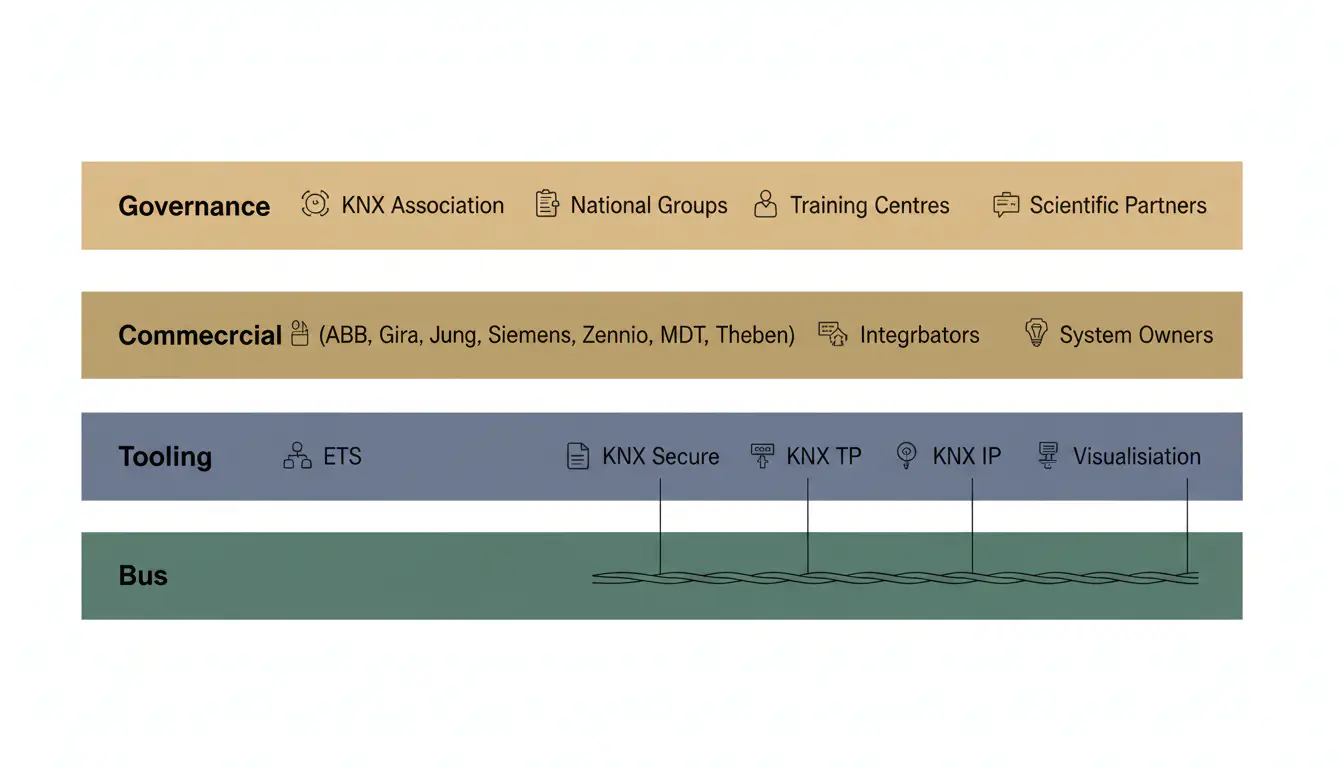
طبقة الحوكمة
هذا هو الجزء الذي لا يراه معظم أصحاب المنازل أبدًا، لكنه الجزء الذي يمنح KNX عمره الطويل.
جمعية KNX. الهيئة المسؤولة، ومقرها بروكسل وتعمل كمنظمة غير ربحية بموجب القانون البلجيكي. تحافظ على معيار KNX، وتعتمد مراكز التدريب، وتدير برنامج اعتماد شركاء KNX، وتملك العلامة التجارية، وتنشر برنامج ETS. وتضم في عضويتها نحو 500 شركة مصنّعة.
المجموعات الوطنية. هيئات إقليمية تعمل تحت مظلة جمعية KNX. وبالنسبة لسوقنا، فهي KNX الشرق الأوسط، النشطة على knx.ae، وتغطي الإمارات والسعودية ومنطقة الخليج الأوسع. تُنظّم المجموعات الوطنية الفعاليات المحلية، وتنسّق مع مراكز التدريب، وتُمثّل الصوت المحلي لمنظومة KNX.
مراكز التدريب. أماكن معتمدة يخوض فيها الأفراد دورة KNX الأساسية، والدورة المتقدمة، والمسارات المتخصصة حسب الدور. وكل مركز معتمد من جمعية KNX ويَنشر أسماء مدرّبيه على knx.org. ويوجد نحو 500 مركز منها حول العالم.
الشركاء العلميون. جامعات ومعاهد بحثية تعمل على تطوير بروتوكول KNX وتطبيقاته. ليست ذات صلة مباشرة بمشتري الفيلا، لكن من المفيد معرفة أن المنظومة تمتد إلى العمل الأكاديمي؛ وهذا جزء من سبب استمرار المعيار في التطوّر.
الطبقة التجارية
هنا تبدأ الأسماء بالظهور المألوف.
الشركات المصنّعة. شركات تصنع أجهزة معتمدة من KNX. تشمل قائمة العلامات التجارية المتوفّرة في الإمارات ABB وGira وJung وSiemens وSchneider Electric وZennio وMDT وTheben، من بين كثير غيرها. لكل منها طابع جمالي مختلف، ومستوى سعري، وعمق منتجات. لا أحد منها يملك KNX. ولا أحد منها يستطيع حبسك ضمن نظامه. وهذه هي الفكرة المعمارية بأكملها.
الموزّعون. موزّعون إقليميون يحتفظون بالمخزون ويورّدون لشركات التكامل. ويتركّز التوزيع في الإمارات في حفنة من بيوت التجارة في دبي وأبوظبي.
شركات التكامل. شركات مثل Haus Logic: هم من يصمّمون أنظمة KNX ويشغّلونها ويصونونها على أرض الواقع. وشركة التكامل هي الحلقة الأهم على الإطلاق في السلسلة لأي مشروع سكني. فهي تختار مزيج الأجهزة، وتكتب المنطق، وتبني الواجهة المرئية، وتقف خلفها طوال عمر المبنى. الشركة المصنّعة الممتازة مع شركة تكامل رديئة تمنحك نظامًا رديئًا. والشركة المصنّعة المتواضعة مع شركة تكامل ممتازة تمنحك شيئًا يعمل لثلاثين عامًا. هذا هو الدور الذي تؤدّيه خدمة تكامل KNX لدينا في دبي.
مالكو النظام. أنت. صاحب المنزل أو المشغّل التجاري. علاقتك في المقام الأول مع شركة التكامل. وضمانات الشركات المصنّعة تمرّ عبرها.
طبقة الأدوات
نظام KNX ليس مجرد أجهزة. إنه أجهزة مضافًا إليها مجموعة محددة من الأدوات البرمجية وخيارات البروتوكول التي تُحدّد مدى موثوقية التركيب وأمانه وقابليته للترقية.
ETS (برنامج أداة الهندسة). برنامج التشغيل الخاص بجمعية KNX. كل مشروع KNX يُصمَّم ويُبرمَج ويُوثَّق في ETS. والتراخيص لكل مستخدم ومرتبطة باعتماد شريك KNX. وإذا لم يستطع مركّبك أن يُبرز ترخيص ETS شرعيًا وملف مشروع ETS نظيفًا عند التسليم، فأنت لا تملك نظامًا مُشغَّلًا بشكل سليم؛ بل تملك صندوقًا أسود لا يستطيع أحد غيره صيانته.
KNX Secure. امتداد أحدث لمعيار KNX يضيف المصادقة والتشفير على مستوى الناقل وطبقة IP. وهو الأهم في التركيبات عالية القيمة حيث قد يكون الناقل قابلًا للوصول ماديًا: مبنى متعدد الاستخدامات، أو عقار تجاري، أو فيلا ذات محيط واسع. ويتطلّب انضباطًا إضافيًا في التشغيل، ولا يقدّمه كل مركّب كخيار قياسي.
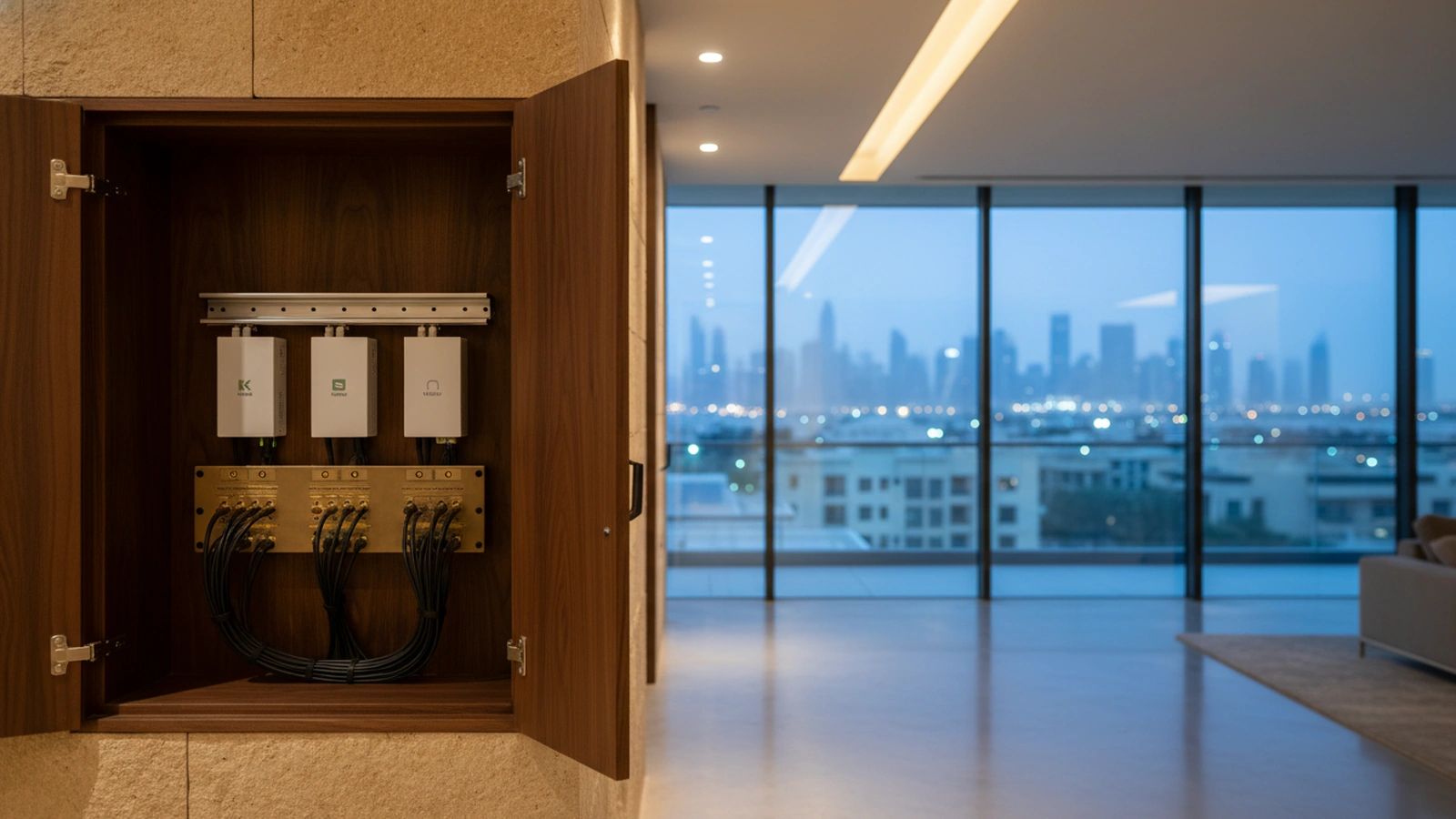
KNX TP وKNX IP. خياران للنقل. KNX TP (الزوج المجدول) هو كابل الناقل الأخضر الأصلي الذي يمتد بمحاذاة التيار الرئيسي لديك. أما KNX IP فيمدّ الناقل عبر شبكة إيثرنت القياسية لحركة أسرع في البنية الأساسية والتكامل مع أنظمة إدارة المباني. وتستخدم معظم الفلل مزيجًا: TP على مستوى النقاط الطرفية، وIP لربط الخطوط والواجهة المرئية.
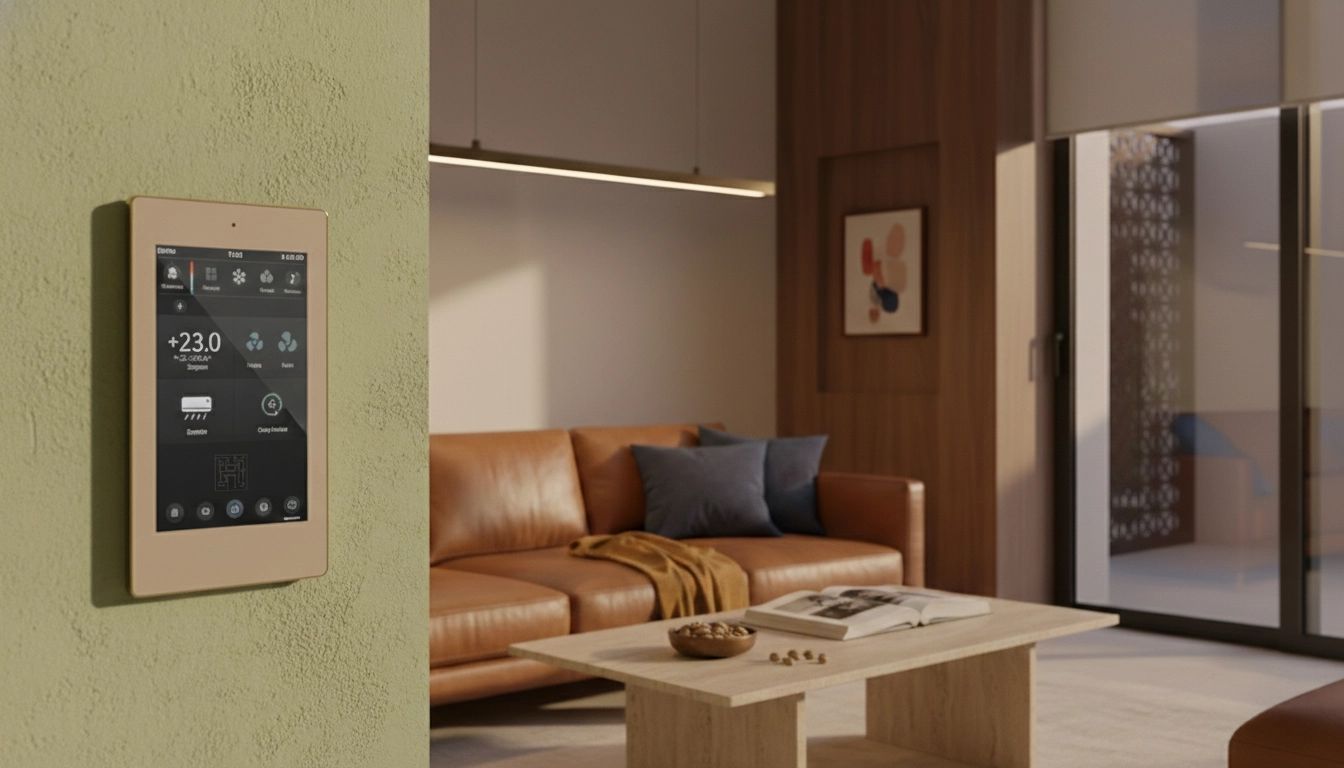
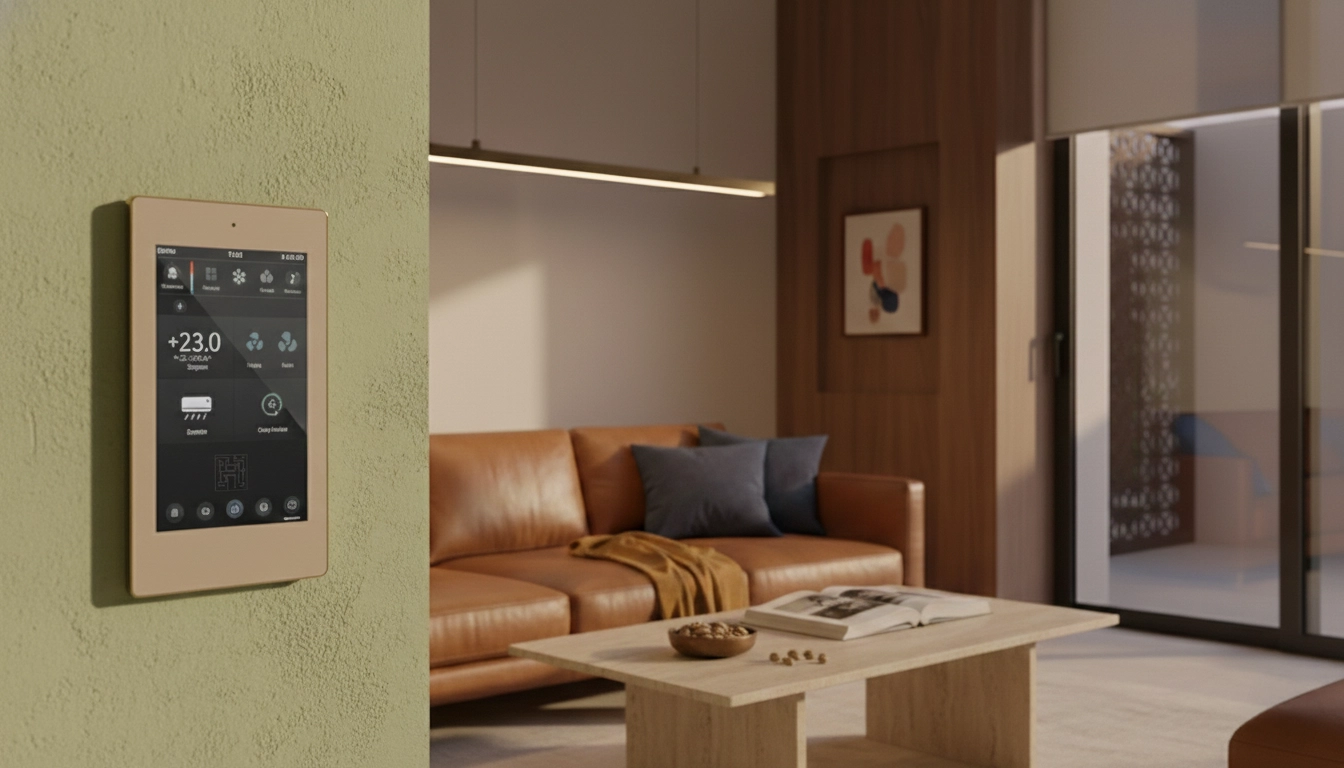
منصّات الواجهة المرئية. لوحات اللمس والتطبيقات التي يستخدمها السكان للتحكم فعليًا في النظام. تقدّم الشركات المصنّعة المختلفة أجهزة عرض مرئية مختلفة. وإلى جانب ذلك، تضيف التركيبات الحديثة على نحو متزايد طبقة تنسيق مخصّصة فوق KNX للحصول على لوحات معلومات أغنى، وتحكّم عبر الهاتف، وتكامل مع أجهزة غير KNX. ونحن نستخدم Home Assistant لتلك الطبقة في Haus Logic: KNX كبنية سلكية أساسية، وHome Assistant كطبقة الذكاء ولوحة المعلومات فوقها.
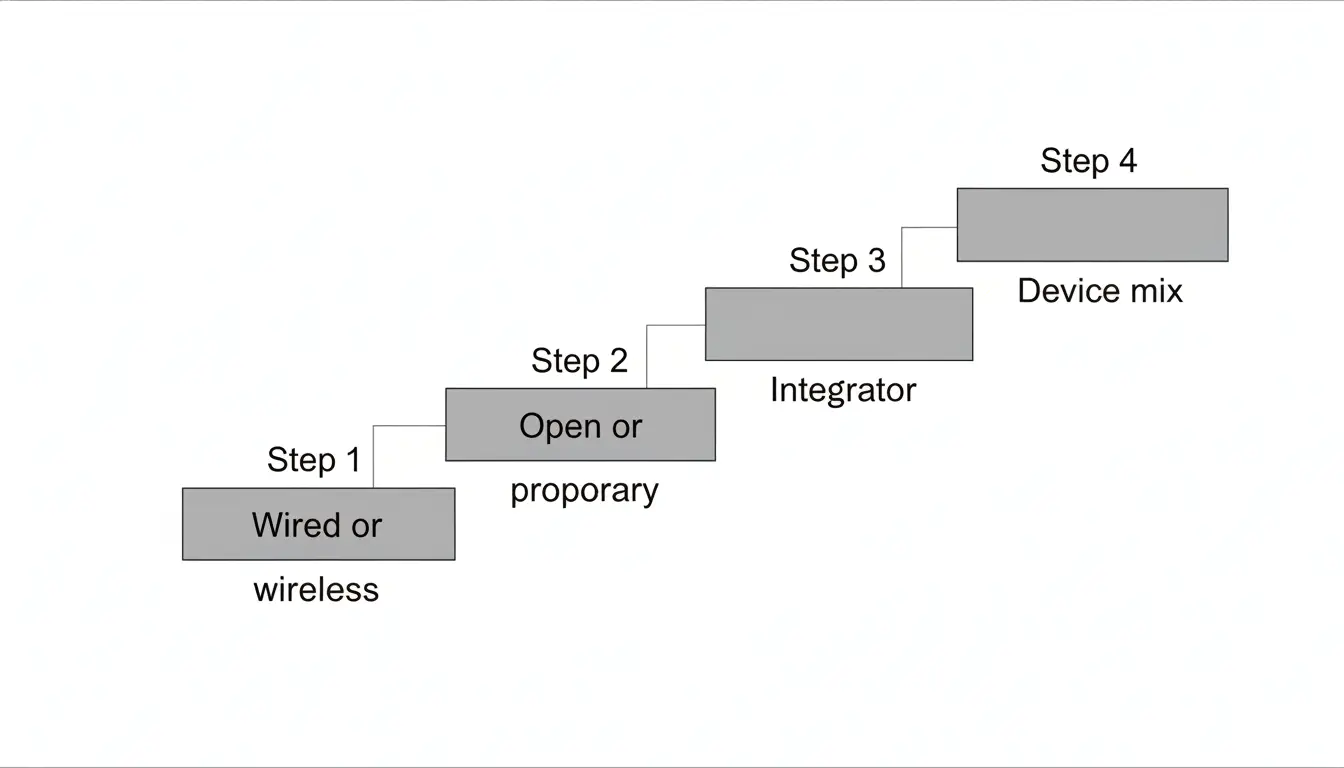
سلّم القرارات التي تواجهها فعليًا
إليك كيف تنعكس كل هذه التفاصيل على الخيارات التي يتخذها مشتري الفيلا، بحسب ترتيب أهميتها.
القرار الأول: سلكي أم لاسلكي. هذا هو المفترق الذي يُحدّد كل ما عداه. الأنظمة اللاسلكية بالكامل تُركَّب لاحقًا بتكلفة زهيدة وتُخفق بطرق طريفة مع مرور الوقت. أما البنية السلكية الأساسية لـ KNX، المُركّبة أثناء البناء أو التجديد الكبير، فهي الخيار المتين لمبنى تنوي امتلاكه لعقود. اختر السلكي وستكون في نطاق KNX.
القرار الثاني: معيار مفتوح أم منصّة مملوكة بمورّد واحد. بعض أنظمة الأتمتة الجادّة منظومات مغلقة: شركة مصنّعة واحدة، تطبيق واحد، مجموعة أجهزة معتمدة واحدة، وشركة واحدة تعتمد عليها لقطع الغيار وتحديثات البرمجيات. وKNX هو النقيض. معيار مفتوح، مئات الشركات المصنّعة، قطع متوفّرة لعقود، وأي شركة تكامل معتمدة من KNX تستطيع استلام مشروع من أي شركة أخرى. اختر المفتوح وستبقى في نطاق KNX.
القرار الثالث: شركة التكامل. هذا هو القرار الوحيد الذي يُشكّل فعليًا تجربتك اليومية. العلامات التجارية على مفاتيحك أقل أهمية من الشخص الذي يُشغّل الناقل. اطلب من أي شركة تكامل اعتماد شريك KNX الخاص بها، وترخيص ETS، وملف المشروع الذي ستسلّمه عند الإنجاز، ومراجع لتركيبات مضى عليها ثلاث إلى خمس سنوات على الأقل. وإذا لم تستطع تقديم كل ذلك بأريحية، فواصل البحث.
القرار الرابع: مزيج الأجهزة. ستمزج شركة تكامل جيدة بين الشركات المصنّعة ضمن المشروع نفسه لتناسب الجماليات والميزانية ومتطلبات الموثوقية. وهذا المزج هو جوهر المعيار المفتوح بأكمله. لا ينبغي إقناعك بتركيب من علامة واحدة إلا لسبب محدّد، و«نحن نورّد تلك العلامة فقط» ليس سببًا.
لماذا يهمّ هذا لفيلا في دبي
ثلاث خلاصات تستحق أن تحتفظ بها.
أنت لا تختار علامة تجارية؛ بل تختار شريكًا. تختار شركة التكامل مزيج الشركات المصنّعة الذي يناسب فيلتك وميزانيتك وجمالياتك ومتطلبات موثوقيتك. وهذا القرار يتراكم أثره على مدى العقدين القادمين.
يُحدّد اعتماد مركّبك وصولك طويل الأمد إلى الأدوات والدعم وقطع الغيار. فترخيص ETS، ونقل الضمان، والوصول إلى مراكز التدريب، وقدرة شركة تكامل مختلفة على استلام مشروعك لاحقًا: كل ذلك مرتبط بشركاء KNX المعتمدين. والتركيب غير المعتمد يقطعك عن هذه المزايا بهدوء، وعادةً ما تكتشف ذلك بعد سنوات حين يحتاج شيء ما إلى صيانة.
يمكنك (بل ينبغي لك) أن تمزج بين العلامات التجارية ضمن مشروع KNX. فهذا هو الغرض من المعيار المفتوح. وإذا أُحسِن التنفيذ، ينتهي بك الأمر إلى نظام يبدو كتركيب واحد متجانس ويتصرّف كذلك، رغم أن الناقل يحمل حركة من خمس شركات مصنّعة مختلفة. وإذا أُسِيء التنفيذ، ينتهي بك الأمر محبوسًا في ما تصادف أن المركّب كان يورّده ذلك الشهر.
الأسئلة الشائعة
هل KNX هو نفسه العلامات التجارية المعروفة المملوكة للمنازل الذكية؟ لا. المنصّات السكنية المملوكة الكبرى للأتمتة منظومات مغلقة: مورّد واحد، تطبيق واحد، مجموعة منتجات محبوسة. أما KNX فمعيار دولي مفتوح بأجهزة قابلة للتشغيل البيني من أكثر من 500 شركة مصنّعة. والنتيجة العملية: مع KNX لست محبوسًا أبدًا لدى مورّد واحد، والقطع متوفّرة على نطاق واسع لعقود، وأي شريك KNX معتمد يستطيع صيانة النظام. بل إن كثيرًا من تلك المنصّات المملوكة باتت تقدّم الآن بوابات KNX تحديدًا لأن KNX أصبح البنية الأساسية المفضّلة للتركيبات الجادّة.
لماذا KNX بدلًا من Zigbee أو Matter؟ KNX سلكي، بمستوى صناعي، ومصمَّم لدورات حياة مبانٍ تمتد من 20 إلى 30 عامًا. أما Zigbee وMatter فهما بروتوكولان استهلاكيان لاسلكيان محسّنان للتركيب اللاحق والتكامل على مستوى الأجهزة الصغيرة. وبالنسبة لفيلا جديدة البناء في الإمارات، يبقى KNX الخيار المتين. ويمكن لـ Matter وZigbee أن يكمّلاه على مستوى الأجهزة الصغيرة (مكبرات الصوت الذكية، والأجهزة المنزلية المتصلة، والمستشعرات العرضية) دون أن يحلّا محل البنية السلكية الأساسية.
هل KNX قديم؟ لا. تُطوَّر بنشاط امتدادات KNX Secure وKNX RF (الراديو) وKNX IoT. وقد ظل البروتوكول المعيار المفتوح المهيمن لأكثر من ثلاثة عقود ولا يزال يتطوّر، بما في ذلك خطوات حديثة لدمج التشغيل المدعوم بالذكاء الاصطناعي في سير العمل الهندسي.
أي شركات KNX نشطة في دبي؟ قائمة طويلة تشمل ABB وGira وJung وSiemens وSchneider Electric وZennio وMDT وTheben. وينبغي لشركة تكامل جيدة أن تكون قادرة على شرح نقاط القوة والمفاضلات لكل منها بالنسبة لمشروعك تحديدًا.
هل يمكنني إضافة أجهزة غير KNX إلى نظام KNX؟ نعم، عبر البوابات. من الأمثلة الشائعة بوابات DALI لوحدات الإضاءة، وModbus لمبرّدات التكييف، وجسور IP لأنظمة الصوت، وتكامل KNX-IP مع منصّات التنسيق مثل Home Assistant. والنظام المصمَّم جيدًا يستخدم KNX حيث يُثبت جدواه (التحكم السلكي في الإضاءة والمناخ والتظليل والطاقة) والبوابات لكل ما عدا ذلك.
---
إذا كنت تصمّم أو تجدّد فيلا وترغب في فهم الشكل الذي سيبدو عليه تركيب KNX المهندَس بشكل سليم لعقارك تحديدًا، فيسعدنا أن نستعرض معك الخيارات. شريك KNX منذ 2014، وحاصلون على شهادة ISO 9001. يمكنك الاطلاع على أمثلة من أعمالنا في معرض أعمالنا. تواصل معنا على projects@hauslogic.io أو +971 54 764 6619.
نظام KNX هو المعيار المفتوح الأوسع اعتمادًا في العالم لأتمتة المباني السكنية والتجارية، وهو شبه خفيّ عن المشتري العادي في الإمارات. جزء من ذلك مقصود بالتصميم. فـ KNX لا يُعلن لأصحاب المنازل. لا يوجد ملصق «KNX Inside» على مفاتيح الإضاءة لديك. إنه معيار تقني هادئ تدعمه مئات الشركات المصنّعة، وشبكة حوكمة عالمية، وثلاثة عقود من القاعدة المُركّبة. هذه المقالة خريطة لتلك المنظومة، مَن يفعل ماذا، ولماذا يهمّ ذلك حين تكون على وشك إنفاق مبلغ كبير على منزل ذكي.