The call to prayer
In the rooms you chose, at the volume you chose, on the same system as everything else.
New and existing villas, apartments and offices in Dubai and Abu Dhabi. One team designs, installs and maintains the system.
Send a short message with the property type and stage. We reply on WhatsApp.
A smart home in Dubai is one system that runs lighting, climate, blinds, security, energy, irrigation and audio together, instead of seven separate apps. This page shows one day in a Dubai home, hour by hour, and what the house does at each stage. The same principle applies in a villa, an apartment or an office.
All eight run on one wired system, so they act on each other: the blinds move because the climate asked them to.


The systems are wired to the KNX standard, so the control sits in the building rather than in a phone or a cloud account. The network is split into isolated parts, which keeps cameras and devices away from the home Wi-Fi. Everything appears on one panel, and any automatic action can be cancelled and set by hand.
Five moments in a Dubai day. The systems appear where they are used, not as a list.
The call to prayer plays in the rooms you chose, at the volume you chose, and nowhere else. The rest of the house is not woken. Path lights come up to a low level rather than full, and cooling starts again before anyone is up. You can silence any room from the panel or from the keypad beside the door.
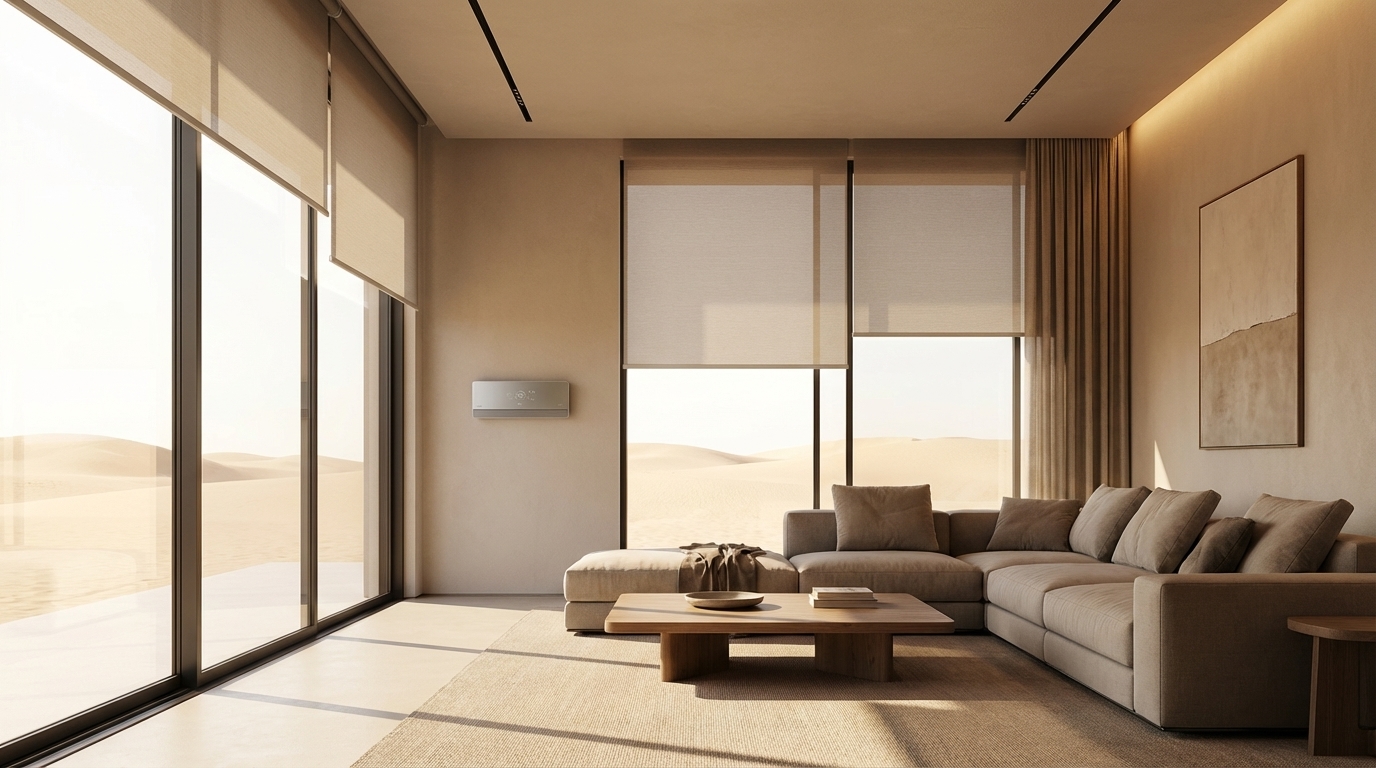
By nine the building is taking heat from the sun. Blinds on the east and south move first, so the glass stops loading heat into rooms that are about to be used, and cooling holds a set point instead of chasing one. The rooms are lit by daylight for most of the day, and electric light stays down until it is needed. Any blind can be driven by hand at any time.
With nobody home the house drops its load. Circuit-level metering shows what the pool pump, the chillers and the kitchen actually draw, so a figure replaces an estimate. Irrigation runs at the hour when the water reaches the roots instead of evaporating, and skips a cycle after rain. Cooling holds an empty room in a wider band rather than at comfort.
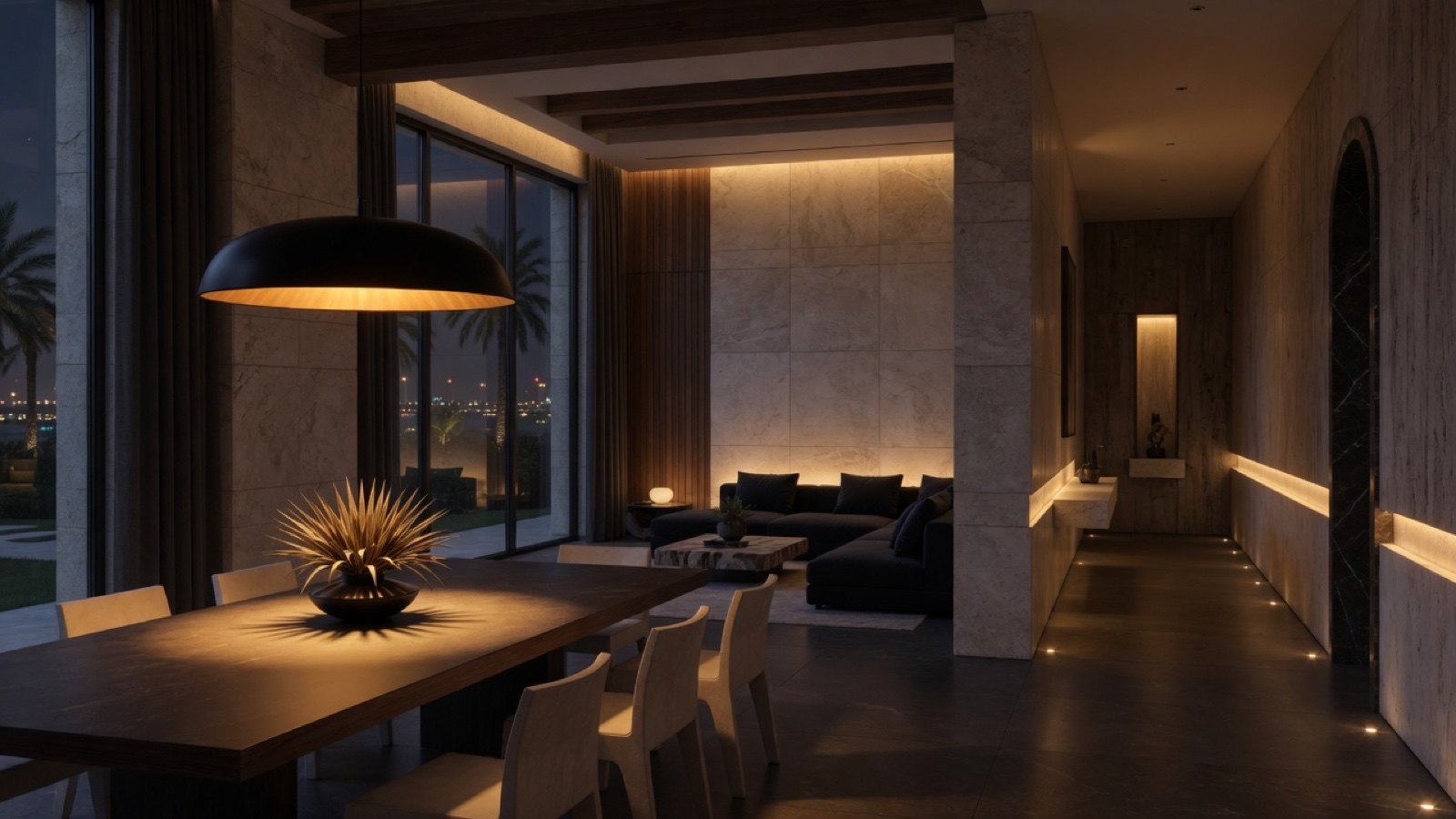
One press sets the level across a room's fittings, lowers the pendants over the dining table and raises the terrace. The rooms nobody is in stay dark. Audio moves with the people rather than staying in one room. Cooling returns to comfort before the first guest arrives, not after. If a scene is wrong for the night, the keypad still raises the light.
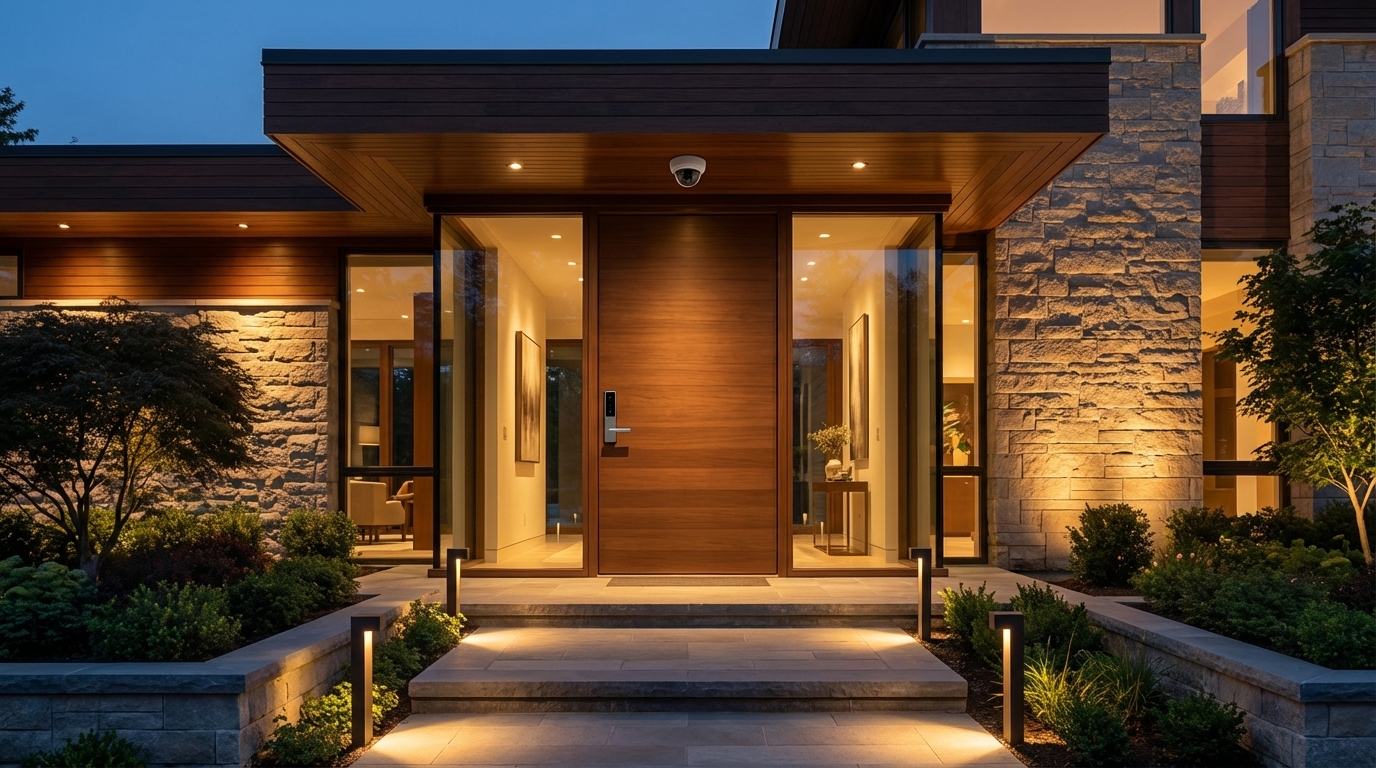
With people asleep in it the house arms the perimeter only: doors, gates and the garden. The inside, including the hallway, is left unarmed. Path lighting drops to the lowest level that still lights the stairs. Cooling sets back in the rooms nobody sleeps in. When the house is empty for a week the away state arms everything, cameras record to the isolated network rather than the home Wi-Fi, irrigation and cooling hold, and a door or window opening sends a notification to your phone.
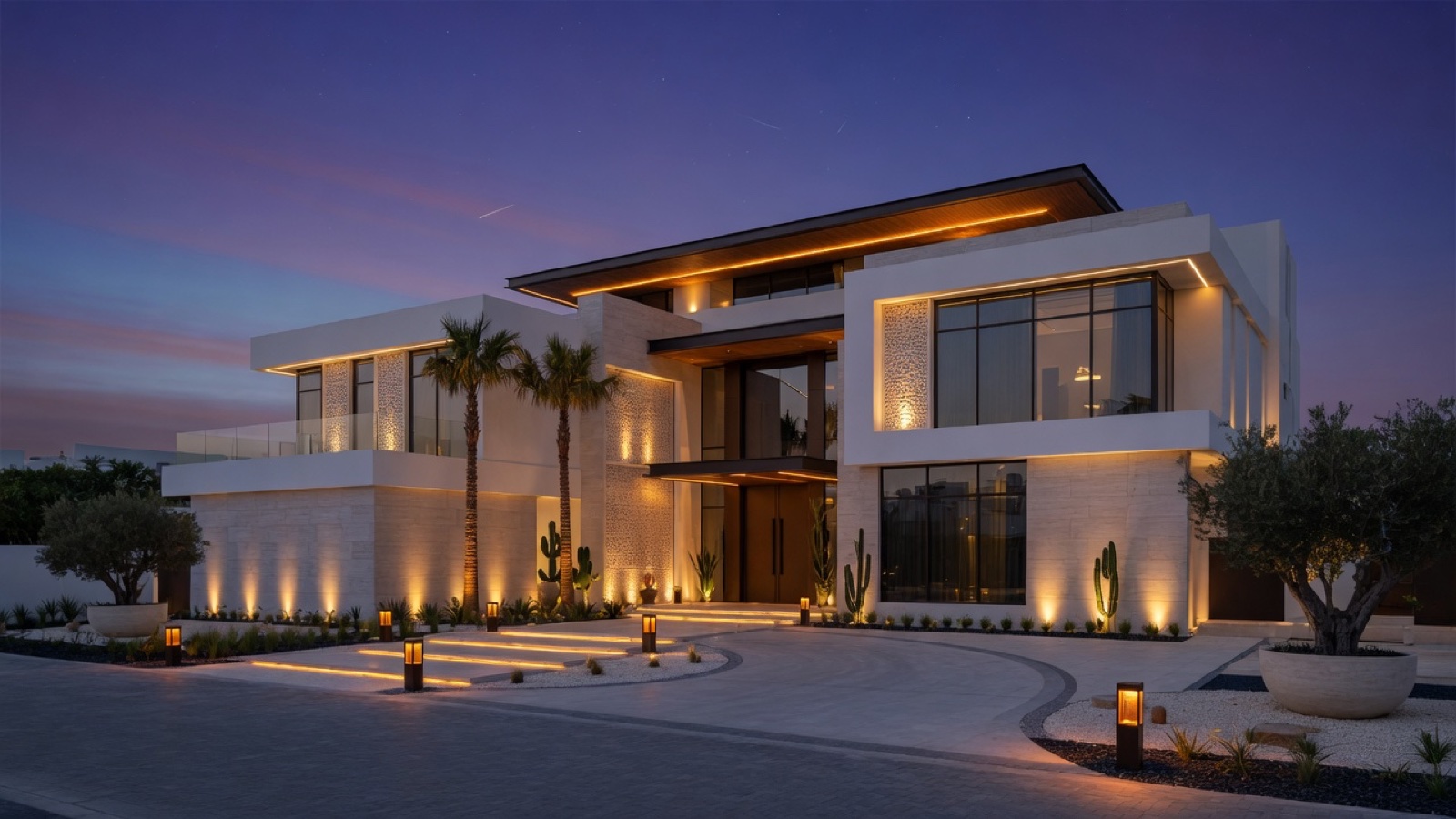
One day, one house
Five moments in a Dubai day. The systems appear where they are used, not as a list.
Scroll
A complete Dubai smart home coordinates eight subsystems on one backbone. The links below explain how we engineer them:
In the rooms you chose, at the volume you chose, on the same system as everything else.
Everything presents as one screen of scenes: Morning, Away, Movie, Holiday; never a per-device app. For the full engineering spec of each system, our home automation solutions hub is the parent page; this pillar explains the category, the solutions hub details the build.
Illustration of the Haus Logic residence dashboard, not a live customer’s home. Example climate, lighting, presence, media and energy readings. The settled view shows a 26°C setpoint, closed curtains, a locked front gate and 42.2 kWh at Home. On small screens, a selection of tiles is shown.
The open wired standard explained: how the bus works, what it controls, and what it costs.
Wired vs wireless compared: reliability, latency, lifespan and cost.
Open standard vs dealer-locked: lifetime cost, maintenance and resale.
DEWA savings, comfort and security weighed against real Dubai costs.
The layers explained: the KNX bus, sensors, scenes, actuators and one dashboard.
An honest buyer's guide: the criteria to judge any integrator on before you sign.
Want to know what a smart home would look like in your villa: the systems, the spec and the number? Book a consultation: a site walk-through, honest ranges, and a proposal, with no obligation and no sales pitch.
The questions Dubai homeowners ask before they start.
Content last reviewed: September 2026