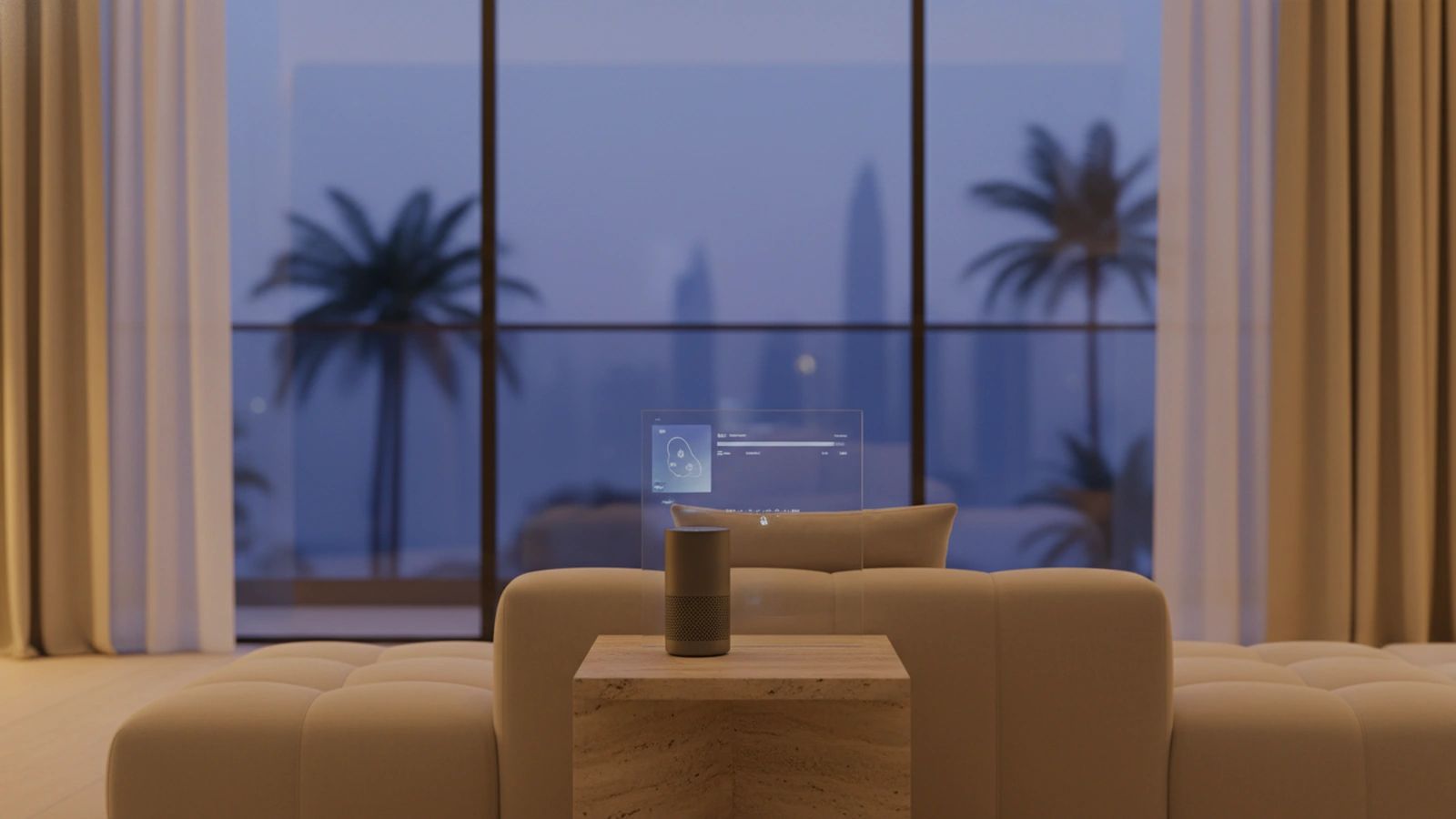
You are standing at the entry of a 12,000 square foot villa in District One, the build is six weeks from handover, and your KNX integrator is asking you to choose a control surface. App on your phone. Voice. Wall keypads. A touch panel. Some combination. The 1Home Touch has just arrived in the GCC through Cache, the authorised 1Home distributor here, and that has shifted the conversation in three of the last five villa walkthroughs we have done. It is worth being precise about where this 4-inch panel earns its place on the wall, and where it does not.
What the 1Home Touch actually is
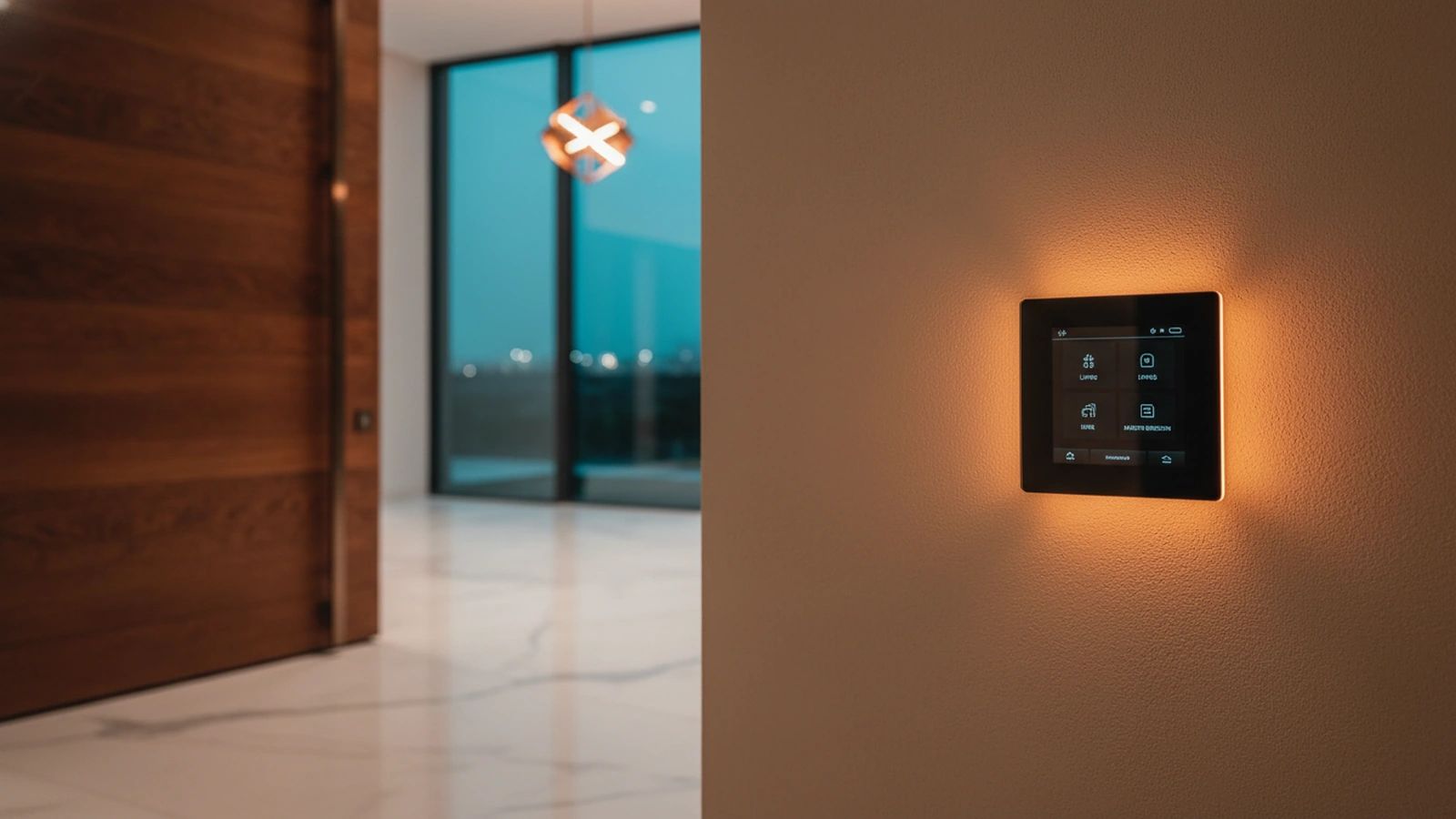
A 4-inch wall-mounted touch panel that runs on top of a 1Home Server. The server is the brain. It speaks KNX over the wired bus, it speaks Apple Home and Google Home over IP, and it now speaks to the Touch panel as a native client. The Touch is intentionally narrow in scope: it shows a clean grid of rooms and scenes, it lets you tap to control lighting, shutters, music and scenes, and it has a built-in SIP intercom with microphone and speaker. The interface generates itself from the 1Home Server's configuration; you do not program the panel separately. Cache holds local UAE stock with next-day delivery on most items, and the broader rollout into Saudi Arabia, Oman and the rest of the GCC is in motion.
That last point is the one to absorb first. The panel does not need its own visualisation pass. The 1Home Server is already pulling room and device information from the ETS project; the Touch reflects that automatically. For an integrator, this changes the labor profile of a control surface from a multi-day visualisation build to a thirty-minute mount-and-power exercise. For a villa owner, this changes the cost of changing your mind later, because moving a panel or swapping its scenes is a configuration change in the 1Home Server, not a re-flash of a custom panel project.
Where the Touch genuinely earns its place
Three rooms in a Dubai villa benefit disproportionately from a wall-mounted touch panel that is not a phone.
The first is the entry. Phones are not always in your pocket when you walk in from the garage with hands full. A panel at the entry lets a guest run a Welcome Home scene without first being onboarded into a household app, and it lets the homeowner trigger an All Off before stepping out without unlocking a device. It is closer to a light switch than to a tablet, and that is the right mental model.
The second is the master bedroom. A bedside panel that controls climate, curtains, and a Good Night scene is a quieter interaction than a phone on the same side table, particularly for the partner who has already turned the light off. The Touch is small enough to live where a clock-radio used to live, and dim-on-approach keeps the screen from becoming a light source in a sleeping room.
The third is any utility-grade location where you want to grant control without granting credentials. A staff hallway. A pool deck. A guest annex. In all of these, you want the room to be operable by someone who is not signed into Apple Home or Google Home on a personal device. A wall panel is the cleanest answer to that, and the built-in SIP intercom adds a function the homeowner would otherwise have to buy a separate door station product for.
Where it does not earn its place
The Touch struggles in two situations we keep seeing on the design brief.
The first is the open-plan kitchen and living space that already has a dedicated KNX wall keypad strategy. A 4-inch touch surface competing with a tactile keypad on the same wall produces decision friction; either the keypad wins because it is faster to find without looking, or the panel wins because it has scene previews, but rarely both. Pick one per zone, and let the other live in the rooms above.
The second is the cinema room. The Touch can drive the lighting and the blinds, but the cinema remote is doing AV source switching, projector control and audio routing on a different layer. If the homeowner is already used to a dedicated AV handheld for the cinema, do not place a Touch on the same wall and ask them to relearn the mapping. The wired KNX layer remains the authoritative actuation backbone; the Touch is a control surface for that backbone, not a replacement for the AV remote.
Why this matters for the wider KNX argument
For thirty-five years, the KNX bus has been about removing the dependency on a phone or a cloud account for the basics of a building working. The 1Home Touch fits inside that argument cleanly. It is a wired-up, locally-served control surface that does not need a cloud login to switch a light. The 1Home Server is also bridging Apple Home and Google Home, so the panel is not a replacement for voice or for apps; it is the third leg of a stool that should already include both.
Where wireless-only smart home platforms struggle in a Dubai villa, the failure mode tends to be the same: the wireless mesh gets congested, the platform's cloud has an outage, or the homeowner's primary device is offline, and the room stops responding. KNX as the wired backbone removes that dependency for the actuation layer. The Touch removes it for the control surface. Industry coverage of wired bus reliability in commercial and residential KNX deployments has been consistent on this point for years.
Practical guidance for the brief
If you are six weeks from a Dubai villa handover and your integrator has not yet offered a control surface plan, ask three questions. Which rooms need a non-phone control surface for guests and staff. Which rooms already have a tactile keypad strategy that should not be disturbed. Which one room would benefit from a small bedside panel with a Good Night scene and curtain control. Map your Touch panels to those answers, two or three units, not eight. The strength of this panel is its restraint; spending it everywhere dilutes it.
If you are curious about whether a 1Home Server and one or two Touch panels would slot into the project you already have on the table, we are happy to walk through the design with your KNX integrator. We install it into the bus we already trust. That is the same architecture behind seven systems on one dashboard across our villa projects.