You wake up tired, even after eight hours of sleep. The bedroom felt stuffy, but the AC was running all night. In the kitchen, there's a faint musty smell near the ceiling that wasn't there last year. Your kids seem to have permanent sniffles. The villa is always cool, so why doesn't it feel fresh?
This is what happens when a home controls temperature but ignores everything else.
In Dubai, we've mastered cooling. But true indoor comfort, the kind that affects your sleep, your family's health, and even your walls, depends on what's in the air, not just how cold it is.
That's where air quality automation comes in. And in a city where homes stay sealed for most of the year, it's not a luxury. It's becoming essential.
What's Actually Wrong with the Air in Dubai Villas?
Dubai's climate creates a unique set of problems that most homeowners don't notice until the symptoms show up.
Dust and sand particles find their way inside through fresh-air intakes, gaps around doors, and every time someone enters the house. These fine particles settle on surfaces, circulate through AC systems, and irritate airways, especially for children and anyone with allergies or asthma.
Humidity is a constant battle. Too much moisture leads to that clammy, uncomfortable feeling, condensation on windows and walls, and eventually mold growth in hidden corners, wardrobes, behind furniture, inside AC ducts. Mold can begin forming within 24–48 hours once relative humidity stays above 60%, which is common in Dubai's coastal climate. Too little humidity (over-dried by AC) causes dry skin, irritated eyes, and respiratory discomfort.
Carbon dioxide (CO₂) builds up in any sealed space where people are breathing. In bedrooms with doors closed overnight, CO₂ levels can climb high enough to cause restless sleep, morning grogginess, and that "stuffy" feeling, even when the temperature is perfect. Research shows that cognitive function and sleep quality start to decline noticeably once CO₂ exceeds 1,000 ppm, and a closed bedroom can hit that level within a few hours.
Volatile organic compounds (VOCs) are gases released by furniture, paints, cleaning products, and new fit-outs. That "new villa smell" after renovations is actually chemical off-gassing, and in a sealed environment, it lingers for months rather than days.
The problem? Most families only address these issues after they've already caused discomfort, health complaints, or property damage. By then, it's reactive and expensive.
How Automation Changes Everything
The idea behind air quality automation is simple: measure what's in the air continuously, and let the house respond automatically, before problems develop.
Instead of running ventilation on fixed timers or waiting for someone to notice a musty smell, an automated system watches the air around the clock and makes constant small adjustments to keep conditions healthy throughout the home.
Sensors That Monitor Every Zone
Small, unobtrusive sensors are installed throughout the villa, in bedrooms, living areas, kitchens, and inside air ducts. These sensors continuously monitor CO₂ levels, humidity, dust particles, VOCs, and temperature, feeding live data back to a central controller.
Think of them as the house's nervous system, constantly reporting conditions in every room so the system knows exactly what's happening and where.
A Smart Controller That Makes Decisions
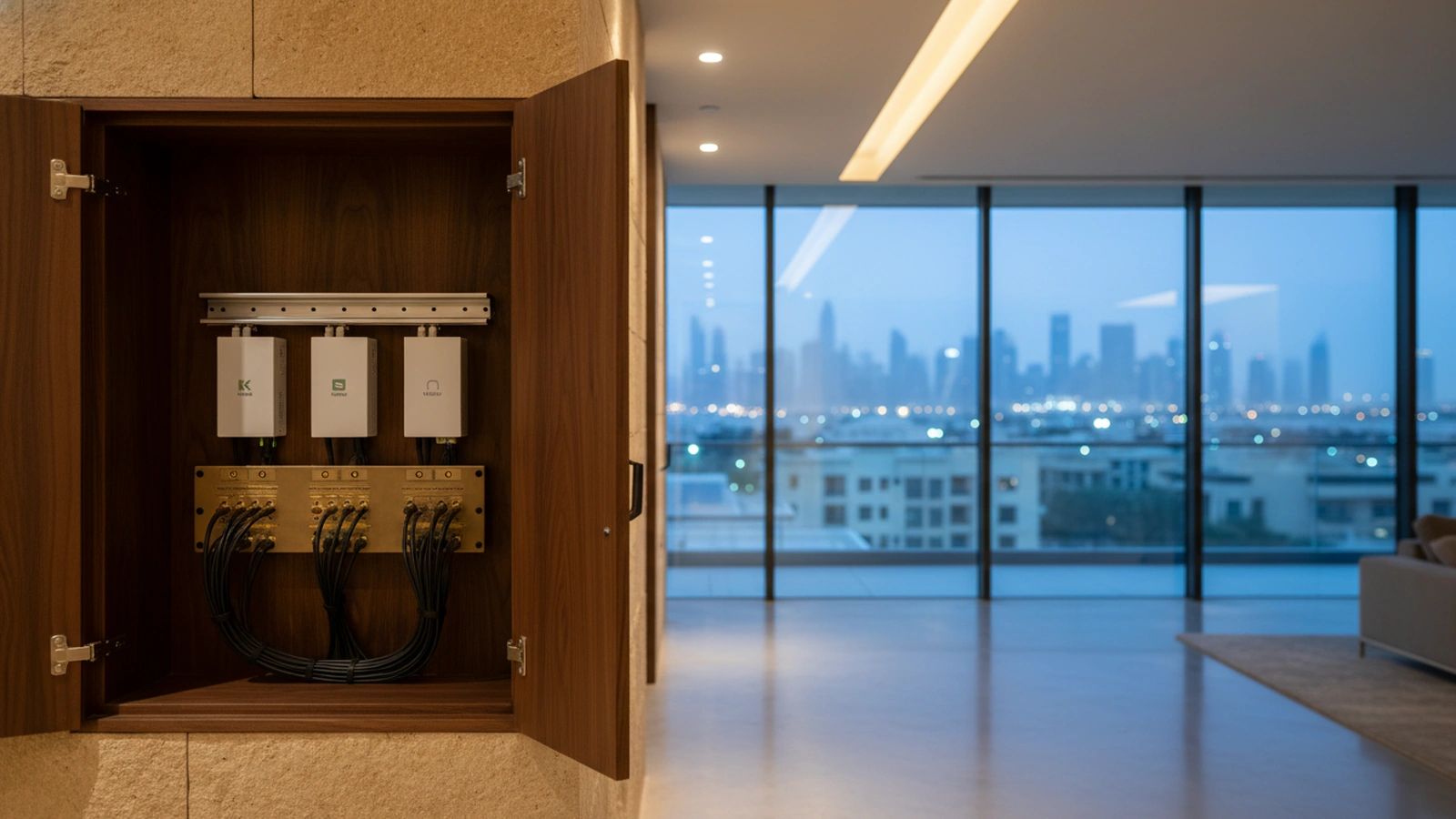
This is the brain of the system. At Haus Logic, we use KNX, an international building automation standard used in luxury homes, hotels, and high-end developments worldwide. Unlike proprietary "smart home" systems that lock you into one brand and become obsolete when the company changes direction, KNX connects devices from hundreds of manufacturers and is designed to last decades.
The controller receives data from all the sensors and applies logic automatically: If CO₂ rises in the master bedroom, increase fresh air to that zone. If outdoor dust spikes during a sandstorm, close the fresh-air dampers and switch to recirculation with enhanced filtration. If humidity climbs in the bathroom after a shower, ramp up extraction.
All of this happens silently and continuously, without anyone pressing a button.
Mechanical Systems That Take Action
The controller sends commands to the equipment that actually moves and treats the air: motorized dampers that open and close fresh-air intakes, variable-speed fans, heat-recovery ventilation units that bring in fresh air without wasting cooling energy, and air purifiers or filters that activate when pollution rises.
The house maintains healthy conditions on its own, no manual intervention required.
Dashboards That Keep You Informed
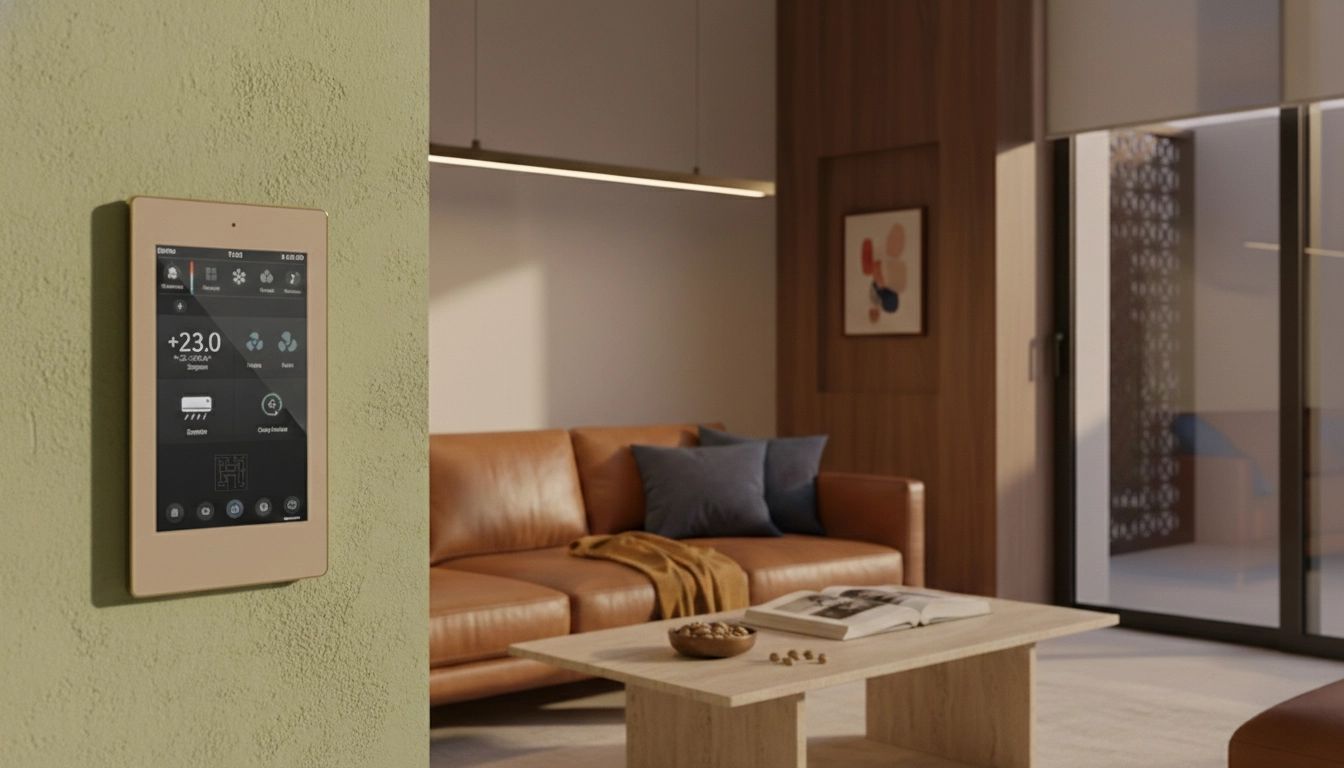
While everything runs automatically, you can still see exactly what's happening. Touchscreens, tablets, or phone apps display live air quality readings in every room, historical trends, and alerts if anything falls outside healthy ranges. You can override the system manually whenever you want, but most homeowners find they rarely need to.
Room by Room: Where It Matters Most
Air quality needs vary throughout a villa. A well-designed system addresses each space according to how it's actually used.
Bedrooms
Sleep quality is directly affected by CO₂ and humidity levels. A bedroom with closed doors and two people sleeping can see CO₂ climb from 400 ppm to over 1,500 ppm by morning, enough to cause restless sleep, frequent waking, and that groggy feeling even after a full night's rest.
Automation maintains fresh air supply to bedrooms throughout the night, keeping CO₂ in the optimal range while also controlling humidity for comfortable sleep. The system operates silently, you won't hear it working.
Children's Rooms and Nurseries
Children are more sensitive to air quality than adults. Dust, VOCs, and CO₂ affect them more acutely, and they spend more time in their bedrooms than other family members.
For nurseries and kids' rooms, automation ensures consistent fresh air, filters out particulates that trigger allergies, and maintains humidity in the healthy range, particularly important for infants and toddlers.
Living and Family Areas
These high-traffic zones see fluctuating occupancy throughout the day. Automation adjusts ventilation based on actual conditions rather than fixed schedules, more fresh air when the family is gathered, scaled back when rooms are empty.
Kitchens
Cooking generates heat, moisture, smoke, and VOCs, all of which should be extracted efficiently rather than spreading through the house. Automated extraction activates based on air quality sensors, not just manual switches, and runs long enough to actually clear the air before shutting off.
Bathrooms and Wet Areas
Humidity extraction is critical in bathrooms to prevent mold growth in tiles, grout, ceilings, and adjacent spaces. Automation runs extraction based on actual humidity levels, continuing until moisture has cleared rather than stopping on a fixed timer.
Home Gyms
Exercise spaces generate CO₂ and humidity rapidly. A closed gym with one or two people working out can see air quality deteriorate within minutes. Automation boosts ventilation during use and maintains it until conditions normalise.
Garages and Storage
These often-overlooked spaces can be sources of VOCs (vehicles, paints, stored chemicals) that migrate into living areas. Proper ventilation isolation and extraction prevents contamination of the main house.
Whole-House Protection
Beyond individual rooms, a properly designed system provides villa-wide protection.
Sandstorm response. When outdoor particulate levels spike, the system automatically reduces fresh-air intake, closes vulnerable dampers, and switches to recirculation with enhanced filtration. You don't need to remember to do anything, the house protects itself.
Mold prevention. Active humidity control throughout the house keeps relative humidity in the 40–55% range where mold cannot establish. This protects walls, ceilings, wardrobes, and soft furnishings from moisture damage.
Energy optimisation. Heat-recovery ventilation (HRV) brings in fresh air without throwing away the cooling you've already paid for. Demand-based ventilation means fresh air is delivered when and where it's needed, not wasted on empty rooms.
Why This Actually Matters
This is where air quality automation stops being a technical feature and becomes something that genuinely improves daily life.
Your family will feel the difference. Correct CO₂ and humidity levels have a direct impact on sleep quality, energy levels, and general comfort. That persistent tiredness, those recurring headaches, the kids' lingering sniffles, these often improve once indoor air quality is properly managed.
Your property is protected. Active humidity control prevents the condensation and mold that silently damage walls, ceilings, wardrobes, and finishes. Catching moisture problems early saves significant repair costs, and protects your family's health.
Your home runs more efficiently. When fresh air is delivered based on actual need rather than fixed schedules, you avoid the energy waste of over-ventilation while still maintaining healthy conditions throughout the house.
Your villa is future-proofed. Health-focused home systems are increasingly expected in premium properties. Whether you're planning to stay long-term or considering resale value, air quality automation positions your property ahead of the curve.
In Dubai's sealed, climate-controlled villas, managing air quality isn't an optional upgrade. It's how modern homes should work.
Wondering What Your Home's Air Actually Looks Like?
Most homeowners have never measured the air quality in their own bedrooms, even though they spend eight hours there every night. The results are often surprising, and the solutions are usually simpler than expected. Our villa climate and air-quality automation service covers both the monitoring and the fixes.
If you're curious about adding real air quality monitoring and automated ventilation to your villa, we'd be happy to walk you through what's possible. Whether it's a new build, a retrofit, or just an initial conversation about your options, get in touch and we'll take it from there.