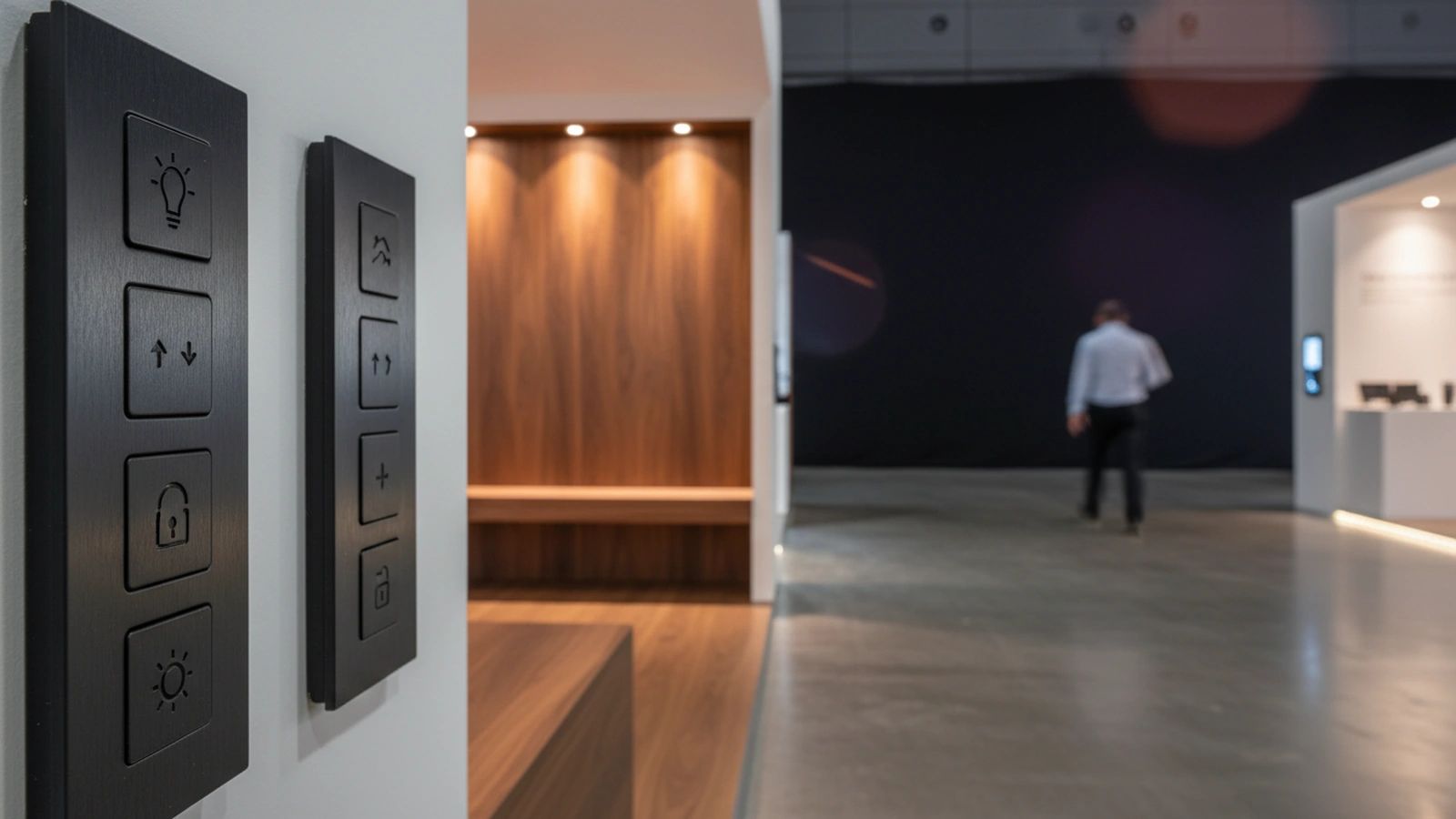
When a global standards body rolls a hands-on training tour into Dubai, it is rarely just about the software. It is a signal about where the local market sits in the global pecking order; who the regional authority is; and which integrators the manufacturers expect to lead the next five years of villa work. The ETS6 Roadshow 2026 hitting Dubai under KNX Middle East falls into exactly that category, and any villa owner thinking about a serious automation project this year should understand what the signal actually says.
The short version: ETS6 is the configuration software that every KNX-certified integrator in the world uses to design, commission, and maintain a KNX building (1). Roadshow events tour the latest release, ETS6.4, to local national groups; the Dubai session is hosted by KNX Middle East, the official KNX National Group for the UAE, Saudi Arabia, and the wider GCC (2)(3). That second part is what carries the weight in a market where "smart home" still means a great many different things, only some of them comparable.
What ETS6.4 actually changes for your villa project
ETS6.4 was released by the KNX Association on 25 February 2026, build 8658, and the update is free for anyone already holding an ETS6 license (4). On a project that costs a six- or seven-figure sum, the cost of the design software is a rounding error; the meaningful question is whether the latest release makes the people commissioning your home faster, more accurate, and less likely to leave little ghosts in the system that surface a year later. ETS6.4 helps on all three counts.
Multi-linking is the headline feature. In earlier ETS releases, linking each group address to each communication object was a one-at-a-time exercise; for a villa with hundreds of lighting circuits, climate zones, and blind motors, the linking phase alone could absorb a working day. ETS6.4 lets the engineer link multiple group addresses to multiple communication objects in a single step (4). The downstream effect is a measurably shorter commissioning window, which is the part of your project most likely to overrun if the integrator is not disciplined.
Auto Backup to Archive is the safety net the previous release lacked. Once an archive location is defined and a first backup created, ETS6.4 now creates a new archive version every time the project is closed (4). For a KNX project that will live in your walls for twenty years and pass through multiple integrators across that lifespan, version history is not a luxury; it is what lets the next engineer working on your home know what the previous one did and why.
Download via Serial Number can now be the default behaviour rather than an option to remember (4). When ETS knows a device's serial, it commissions to that specific device rather than relying on programming mode and a physical button press. For a villa where the indoor units, blind actuators, and KNX/IP gateways are scattered across plant rooms, ceilings, and risers, this saves the integrator hours of access work and means fewer ladders against your freshly painted walls.
ETS6.4 also defaults to native 64-bit mode, with full access to system memory and clearer handling of compatibility modes for legacy app dependencies (4). For most villa projects this is invisible; for the few projects that lean heavily on ETS Apps or that handle very large group address ranges, the difference is real.
Why the certification angle is the part that matters
KNX is a wired standard with a global certification system; the ETS software, the device certifications, the integrator certifications, and the training centres all flow through the KNX Association in Brussels (5). A KNX Partner certificate is earned by completing a five-day basic course at an accredited training centre and passing a final exam (5). Beyond that, advanced and tutor certifications layer on more specialised competence.
For a Dubai villa owner, this matters less because the certificate is impressive on a wall and more because the certificate is the only formal way to verify that the person designing your wired infrastructure has been trained against the standard their work will outlive. KNX devices from the major manufacturers will not even pair into a project file unless the engineer running ETS has the right credentials. That gating function is what keeps the standard intact across decades.
The ETS6 Roadshow tour is, in practical terms, a continuing-education event for the integrator community. Attendees pick up the latest ETS features hands-on; collect promotional benefits including the free ETS Bulk Linker app and an ETS license discount; and earn +5 Partner Ranking points that nudge them up the KNX Find a Partner directory (1). For the local integrator community in the UAE, the Dubai stop is the one event of the year where the global software roadmap meets a room full of regional engineers.
What this signals for the UAE villa market
The KNX National Group structure is how the standard organises itself in each country. KNX Middle East is the official group for the UAE, Saudi Arabia, and the wider GCC, and it is hosting the Dubai session of the 2026 roadshow (2). Two things follow from that.
First, the local market is mature enough to warrant a dedicated regional stop on a tour that runs from April through November 2026 across multiple countries (1). A national group does not get to host a roadshow event if its certified partner count, project pipeline, or manufacturer presence cannot fill a room. Dubai now meets that threshold; ten years ago it did not.
Second, the integrators who turn up matter more than the integrators who do not. KNX certification is not a marketing badge; it is a renewed competence check tied to specific software versions. An integrator who skips the ETS6 Roadshow is an integrator who is one or two software cycles behind on the features that will define their commissioning speed for the next eighteen months. When you compare quotes for a villa project this year, the question of which integrator was in the room at the Dubai roadshow is a fair one to ask.
What to do with this information
If you are a Dubai villa owner planning a KNX project for handover in 2026 or 2027, three takeaways:
First, ask your shortlisted integrators whether they attended the ETS6 Roadshow 2026 Dubai session. If they did, ask what changed in their commissioning workflow as a result. The good answer involves multi-linking and serial-number downloads; the bad answer is silence or a vague reference to "new features".
Second, ask which version of ETS they will use to commission your project. If the answer is anything older than ETS6.4, ask why. There is no licensing reason to be on an older version for a project starting this year; the update is free, and the workflow improvements compound across the commissioning window.
Third, if your integrator hands you project files at the end of the job, ask whether the Auto Backup to Archive option was active across the build. The future engineer who comes back to your house in 2034 to add a new lighting scene will thank you, even if your current integrator does not see why it matters.
How we work at Haus Logic
We have been KNX Partners since 2014, and the ETS roadmap is one of the things we track quarterly rather than annually. The features that ship in each release become the small operational efficiencies that compound across a year of villa commissioning; multi-linking on its own is worth a working day per project. We update our internal ETS6 builds within the first week of each release, and the ETS6 Roadshow is the standing date in our calendar for confirming the regional roadmap matches the global one.
If you are weighing up integrators for a KNX villa project in 2026, we are happy to walk through what ETS6.4 changes for your specific scope; how a properly archived project file protects you a decade out; and what the Dubai certification community looks like behind the marketing pages. If that would be useful, book a short call and we will cover all three for your project.