You walk into the living room and flip the switch. The overhead light blasts on at full brightness, fine for cleaning, terrible for relaxing. You dim it manually, but now the room feels flat. The architectural details disappear, the artwork looks dull. You turn on a floor lamp, then the cabinet lights, then adjust the dining pendants. Ten minutes of fiddling later, the room looks decent. Tomorrow, you'll do it all again.
This is what happens when lighting is designed for installation, not for living.
Professional lighting control solves this differently. Instead of managing individual fixtures, you manage experiences, and the system handles everything else.
---
At a Glance
Level 1 (Simple Switching): Traditional on/off control with smart capabilities. Reliable, foolproof, foundation for everything else. Best for utility areas and staff quarters.
Level 2 (Dimming): Full brightness control from 0-100%. Transforms ambiance, balances natural light, reduces energy use. Best for bedrooms, bathrooms, living spaces.
Level 3 (Scene Control): One button, multiple lights. Press "Movie" and the room transforms. Best for open-plan living, entertainment, daily convenience.
Level 4 (Fully Adaptive): Lights respond automatically to motion, daylight, and time. Hands-off operation, maximum efficiency. Best for hallways, offices, and those who want the ultimate system.
The key insight: You don't choose one level for your whole home. A typical villa uses all four, matched to how each space is actually used.
---
Why Lighting Control Matters in Dubai
Before diving into the levels, it's worth understanding why professional lighting control is particularly valuable here.
Dubai's climate creates unique challenges. The intense afternoon sun flooding through floor-to-ceiling windows can overwhelm interior spaces, while the rapid transition from daylight to darkness (we don't get long European twilights) means artificial lighting needs to compensate quickly. Large villas with high ceilings require carefully positioned, powerful fixtures that need proper control to avoid feeling like commercial spaces. And with outdoor living extending to terraces, pools, and gardens for much of the year, lighting control needs to reach beyond the building envelope.
There's also the practical matter of energy costs. Lighting a large villa inefficiently adds up quickly. The efficiency features in professional systems aren't just environmentally responsible, they're financially meaningful.
Level 1: Simple Switching
At its core, this is lighting that works exactly as you'd expect. Press a switch, light comes on. Press it again, light goes off. Your housekeeper doesn't need training. Your guests don't get confused. The system works even if the network goes down.
The difference from conventional wiring is that these switches communicate with a central system. This enables features that would otherwise require complex installation: a single "All Off" button by the front door that kills every light in the house, timer scheduling that makes the property look occupied while you're travelling, and integration with other systems so that arming the alarm automatically switches off forgotten lights.
For utility rooms, garages, storage areas, and staff quarters, this level is usually all you need. The switches work exactly as expected, the operation is foolproof, and you have the foundation in place if you ever want to add more capability later.
This is the principle that separates professional automation from consumer gadgets: reliability comes first. Clever features mean nothing if the basic operation ever fails.
Level 2: Dimming Control
Dimming transforms how you experience a space. Instead of the harsh binary of on and off, lights fade smoothly to precisely the level you want. A bedroom at 20% for reading in bed feels entirely different from the same room at 100% when you're getting dressed. A dining room at 40% creates intimacy that full brightness never could.
In Dubai, dimming serves a practical purpose beyond ambiance. With strong afternoon sun streaming through west-facing windows, you often need different light levels at different times of day, brighter in the morning when natural light is softer, lower in the afternoon when direct sunlight floods in. Dimming lets you adapt without constantly adjusting blinds or accepting that the room will feel wrong for half the day.
The energy impact is significant too. A light dimmed to 50% uses considerably less power than one at full brightness. Across a villa with dozens of fixtures running for hours each evening, this adds up to meaningful savings on your DEWA bill.
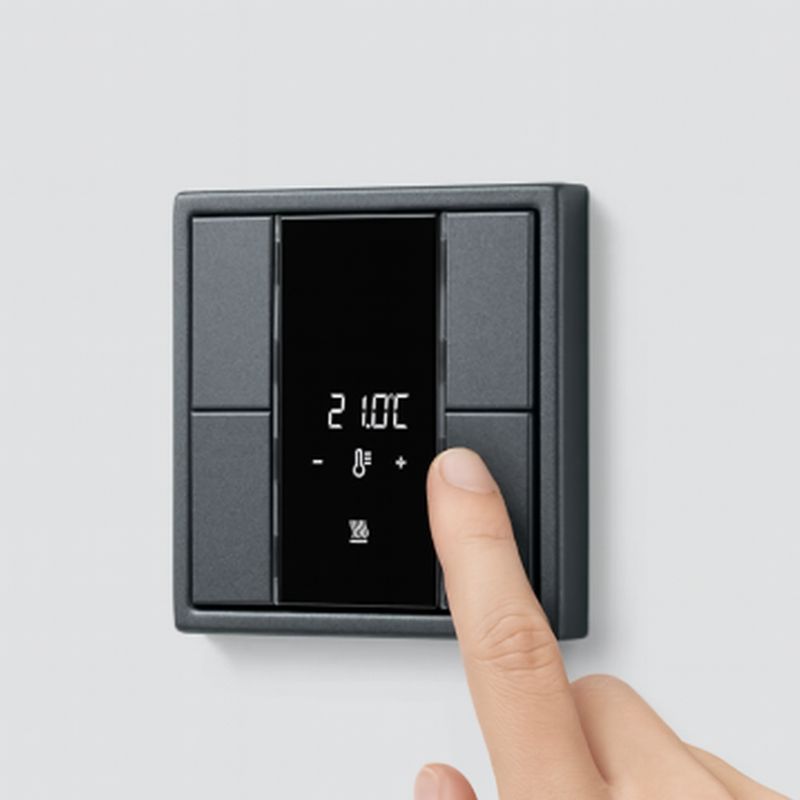
Professional dimming uses elegant keypads that feel substantial and responsive. Lights fade on and off rather than snapping, transitions feel natural rather than mechanical, and favourite levels can be saved so you're not constantly adjusting. Morning might mean bright and energising; evening might mean soft and warm. The same fixtures, entirely different experiences.
Level 3: Scene Control
This is where automation starts to feel genuinely worthwhile. Instead of adjusting multiple lights individually, the ceiling fixture, the wall sconces, the cabinet lights, the floor lamp, you press a single button and the entire room transforms.
"Good Morning" might mean gradual brightening in the bedroom over ten minutes, bathroom lights at a comfortable medium, and kitchen at full brightness for making coffee. "Dinner Party" might set the dining table at 60% with accent lighting highlighting artwork and ambient glow in the adjacent living area. "Movie Night" dims everything except soft LED strips behind the television and pathway lighting at ankle level. "Good Night" switches off everything except bathroom night lights and exterior security lighting.
The real benefit isn't impressive technology, it's that you stop thinking about lighting entirely. You don't manage six switches and three dimmers. You press "Relax" and the room responds. After a few weeks, this becomes so natural that manually adjusting lights in other buildings feels frustratingly primitive.
Scenes become even more powerful when integrated with other systems. "Movie Night" can simultaneously close the blinds, set the AC to your preferred temperature, and switch the AV system to the correct input. "Good Night" can lock the doors, arm the perimeter sensors, and confirm the garage is closed. One button, one intention, everything responds.
For open-plan living, which dominates modern Dubai villa design, scene control is almost essential. When your kitchen, dining area, and living room flow into each other without walls, you need coordinated lighting across the entire space. Individual control becomes impractical; scenes become the natural interface.
Level 4: Fully Adaptive Automation
At this level, you rarely touch a light switch at all. The system understands where you are, how much natural light is available, what time it is, and what you're likely doing. It responds accordingly.
Motion and presence sensors detect occupancy. Walk into a hallway and the lights activate. Leave, and they fade off after an appropriate delay. At 2am, they come on at 20% so you're not blinded walking to the bathroom. At noon, they might not activate at all because there's enough natural light.
Daylight harvesting adjusts artificial light based on what the sun is providing. In a glass-walled home office, lights near the window dim automatically when the sun is bright, while fixtures deeper in the room compensate to maintain consistent illumination. The light level you experience stays constant; the energy consumption varies with conditions. Savings of 30-40% compared to static lighting are typical.
Circadian lighting shifts colour temperature throughout the day, cool white in the morning to support alertness, gradually warming to soft amber by evening to prepare your body for sleep. Research increasingly supports the impact of light colour on sleep quality and daily rhythm. In Dubai, where we spend significant time indoors with air conditioning, this matters more than in climates where you're naturally exposed to shifting daylight.
Vacancy detection catches the inevitable forgotten lights. The guest bedroom that's been empty for thirty minutes switches itself off. The walk-in closet you left in a hurry turns off after a sensible delay. You stop paying for lighting that nobody is using.
This level requires more sensors, more programming, and more investment. But for the right spaces, hallways, bathrooms, home offices, common areas, it delivers lighting that genuinely anticipates your needs rather than merely responding to your commands.
Choosing the Right Level for Each Space
The beauty of professional systems built on KNX, the international standard that's been running European commercial buildings for three decades, is that you don't choose one level for your entire home. Different spaces have different needs.
A typical Dubai villa might use Level 1 in the utility room, garage, and staff quarters where foolproof simplicity matters most. Level 2 in bedrooms and bathrooms where ambiance and personal preference vary. Level 3 in living areas, dining rooms, and entertainment spaces where scenes transform daily experiences. Level 4 in hallways, powder rooms, and home offices where automatic response makes the most sense.
The underlying wiring infrastructure supports all levels equally. Adding automation later is a matter of sensors and programming, not reconstruction. Start with what makes sense today, knowing expansion is straightforward.
What Actually Happens During Installation
Understanding the levels is useful, but the real question is how we figure out what you need.
During consultation, we walk through your home room by room, discussing how you actually live. Do you entertain frequently? Work from home? Have young children with different bedtime routines? Do you travel often and want the house to look occupied? Are you conscious of energy costs or primarily focused on convenience?
Your answers shape our recommendations. There's no point installing Level 4 automation in a room where Level 2 does everything you need. Equally, compromising on scene control in the living room to save money often leads to regret, that's where you spend your time, and that's where lighting quality matters most.
---
Wondering What Your Lighting Could Actually Do?
Most homeowners have never experienced properly controlled lighting, the kind where rooms transform with a single touch and you stop thinking about switches entirely. It's one of those things that's difficult to appreciate until you've lived with it.
If you're curious about what's possible in your property, whether it's a new build where we can plan from scratch, or an existing home where retrofit options might surprise you, we're happy to walk through the options. Sometimes the right answer is comprehensive automation; sometimes it's targeted upgrades to the spaces where you'll notice the difference most. Lighting is one of the seven systems we automate, and it rarely stands alone.