You leave for work at 7am with the AC off to save electricity. By the time you return at 6pm, the villa has been baking for eleven hours. You walk through the door into a wall of heat, crank every unit to 18°C, and wait 45 minutes for the house to become bearable. Meanwhile, the compressors are working at maximum capacity, the most expensive and least efficient way to cool a building.
This is how most Dubai homes still operate. And it's not just uncomfortable. It's costing you money every single day.
The Reality of Cooling in Dubai
Air conditioning isn't optional here, it's infrastructure. The average villa runs AC for eight to ten months of the year, and cooling typically accounts for 60-70% of residential electricity bills. Yet despite this, most homes control their climate the same way they did two decades ago: walk to a thermostat, set a temperature, hope for the best.
The problem isn't the AC equipment itself. Modern split units and central systems are remarkably efficient. The problem is how we control them, or rather, how we fail to.
Four Levels of Climate Automation
Climate control systems exist on a spectrum. Understanding where your current setup sits helps clarify what's possible, and what's worth investing in.
Level 1: Individual Unit Control
This is where most "smart thermostats" operate. Each AC unit gets its own controller, and you can adjust settings from your phone instead of walking to the wall panel. You can turn on the AC from your car so the house is cool when you arrive. You can check whether you left the bedroom unit running.
It's convenient, and for a small apartment with two or three units, it's often enough. But in a villa with eight, ten, or twelve AC units? You're now managing a dozen separate settings. Each room is an island. There's no coordination, no intelligence, just remote controls with better range.
Level 2: Zone-Based Control
Here, you stop thinking about individual units and start thinking about areas. Instead of setting the master bedroom AC to 22°C and the ensuite AC to 23°C and the walk-in closet AC to 24°C, you simply set "Master Suite" to your preferred temperature. The system figures out which units need to run and at what capacity.
A typical Dubai villa might have zones for the master suite, children's bedrooms, living and dining areas, kitchen, guest suite, staff quarters, and home office. Each zone responds as a single entity, even if it contains multiple AC units, thermostats, and sensors.
This is where coordination begins. The system can balance loads, prevent units from fighting each other, and maintain consistent comfort across spaces that share common areas.
Level 3: Mode-Based Living
This is where automation starts to feel genuinely intelligent. Instead of setting temperatures, you set intentions.
"Sleep Mode" might mean bedrooms at optimal sleeping temperature (research suggests 18-20°C), living areas allowed to drift warmer since no one's using them, and fan speeds reduced for quiet operation. "Away Mode" might raise setpoints throughout the house to reduce consumption while keeping humidity in check to protect interiors. "Guest Mode" might activate the guest suite zone and adjust common areas for entertaining.
You're no longer managing climate, you're telling your home what you're doing, and it responds appropriately. One tap replaces a dozen decisions.
Level 4: Predictive Comfort
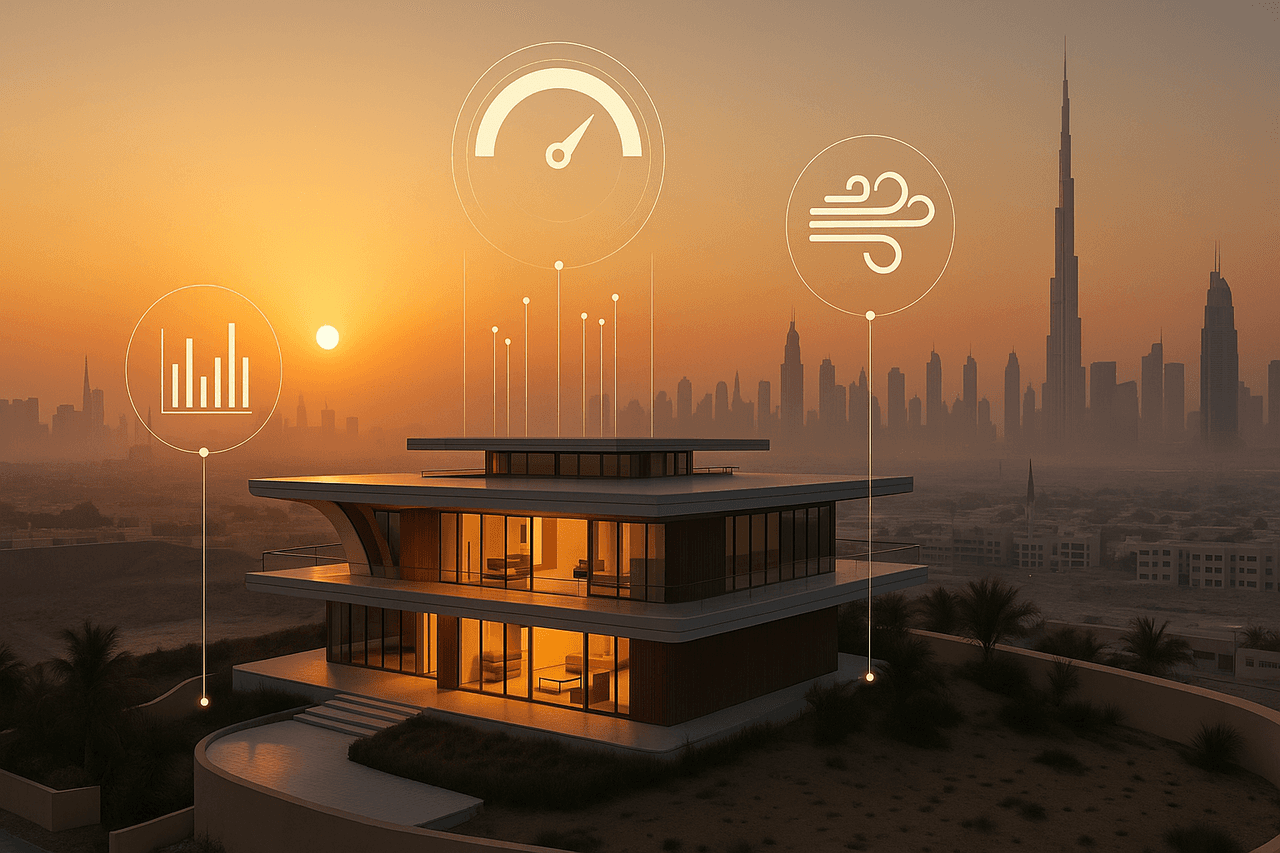
This is the destination. Your home observes your patterns over weeks and months, then acts before you do.
The system notices you typically arrive home at 6:15pm on weekdays. At 5:30pm, it begins pre-cooling, not to your final comfort temperature, but enough that the house reaches your preferred state exactly as you walk through the door. The cooling happens gradually, efficiently, without the compressors ever hitting maximum strain.
It notices your bedroom drops two degrees overnight because it faces east and the morning sun hasn't hit yet. So it adjusts the overnight setpoint slightly higher, knowing the room will naturally cool. You sleep at the same effective temperature, but the AC runs less.
It knows weekends are different. It knows when you travel. It learns that Thursday evenings usually mean guests, and prepares accordingly.
This isn't science fiction. It's pattern recognition applied to your daily life, running on systems that exist today.
Why This Matters Beyond Comfort
Energy consumption drops significantly. Pre-cooling a home gradually is dramatically more efficient than crash-cooling it after hours of heat soak. Studies on commercial buildings show predictive HVAC control reduces cooling energy by 15-30%. For a Dubai villa spending AED 3,000-5,000 monthly on electricity in summer, that's meaningful.
Equipment lasts longer. Compressors hate being slammed to maximum capacity. Gradual, predictive operation reduces wear on the most expensive components in your HVAC system.
Humidity stays controlled. In Dubai's coastal humidity, AC systems do double duty, cooling air and removing moisture. Intelligent systems maintain humidity targets even when you're away, preventing the condensation and mold issues that plague properties left to swing between extremes.
Comfort becomes effortless. No more walking room to room adjusting settings. No more forgetting to turn things off. No more coming home to a sauna. The house simply works.
How We Implement This
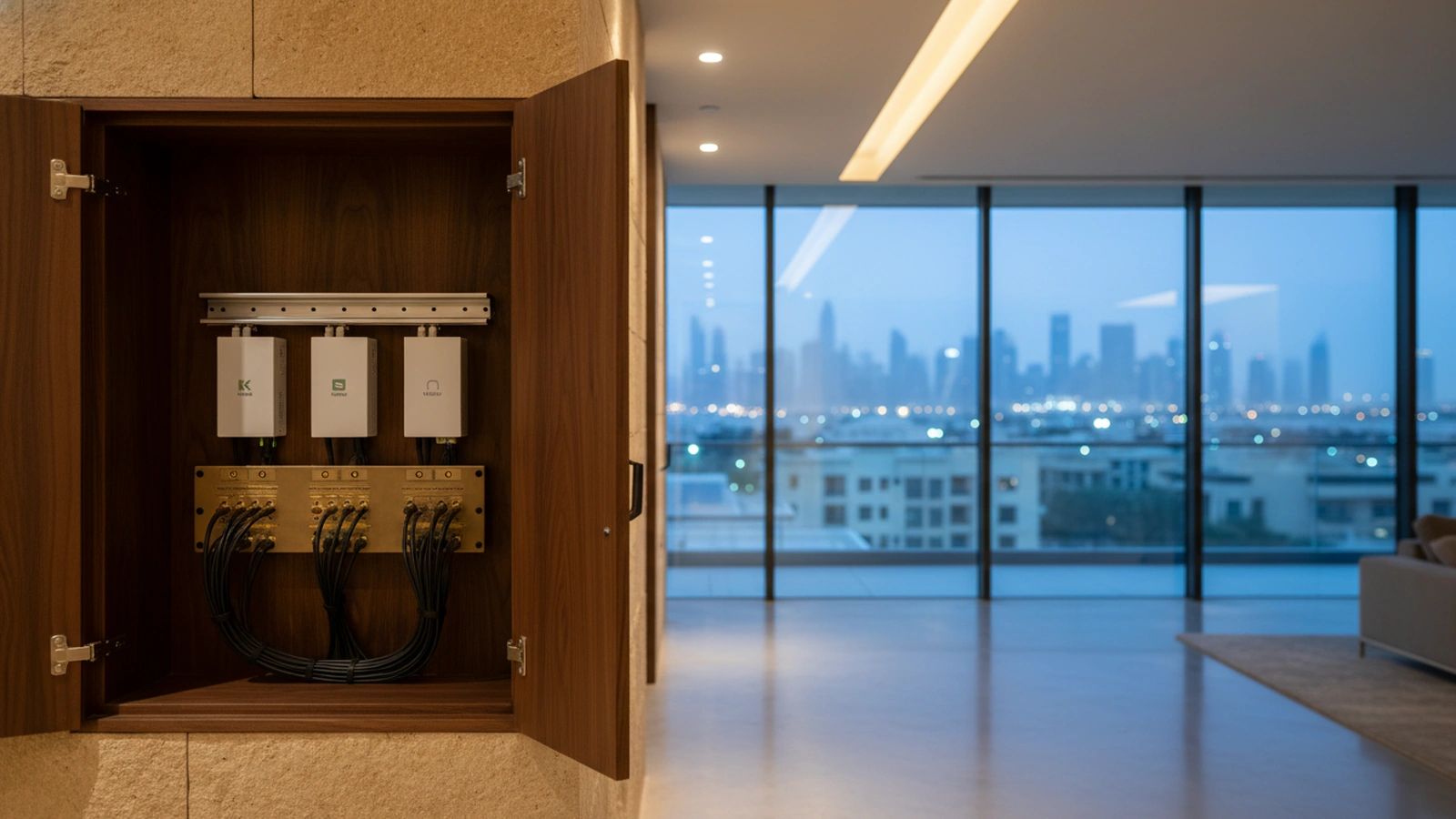
At Haus Logic, we build climate automation on KNX, the international standard for building control that's been running European commercial buildings for over 30 years. It's wired, reliable, and not tied to any single manufacturer's ecosystem.
Your AC units, whether splits, ducted, or VRF, connect to the KNX backbone through appropriate interfaces. Sensors throughout the home feed temperature, humidity, and occupancy data to the central logic. The system makes decisions every few seconds, adjusting outputs to maintain your defined conditions.
We typically implement climate automation as part of a broader building control system that includes lighting, blinds, and security, but it can also be retrofitted as a standalone upgrade to existing properties.
---
What Could Your Cooling Actually Look Like?
Most Dubai homeowners have never seen their AC consumption broken down by zone, or understood why certain rooms never feel quite right despite the thermostat reading correctly. The answers are usually more interesting than expected.
If you're curious about what modern climate control could do for your villa, whether it's a new build or a retrofit, we're happy to walk through the options. Sometimes it's a full system, sometimes it's targeted upgrades to the areas that matter most. Our page on predictive climate control for villas outlines both routes.