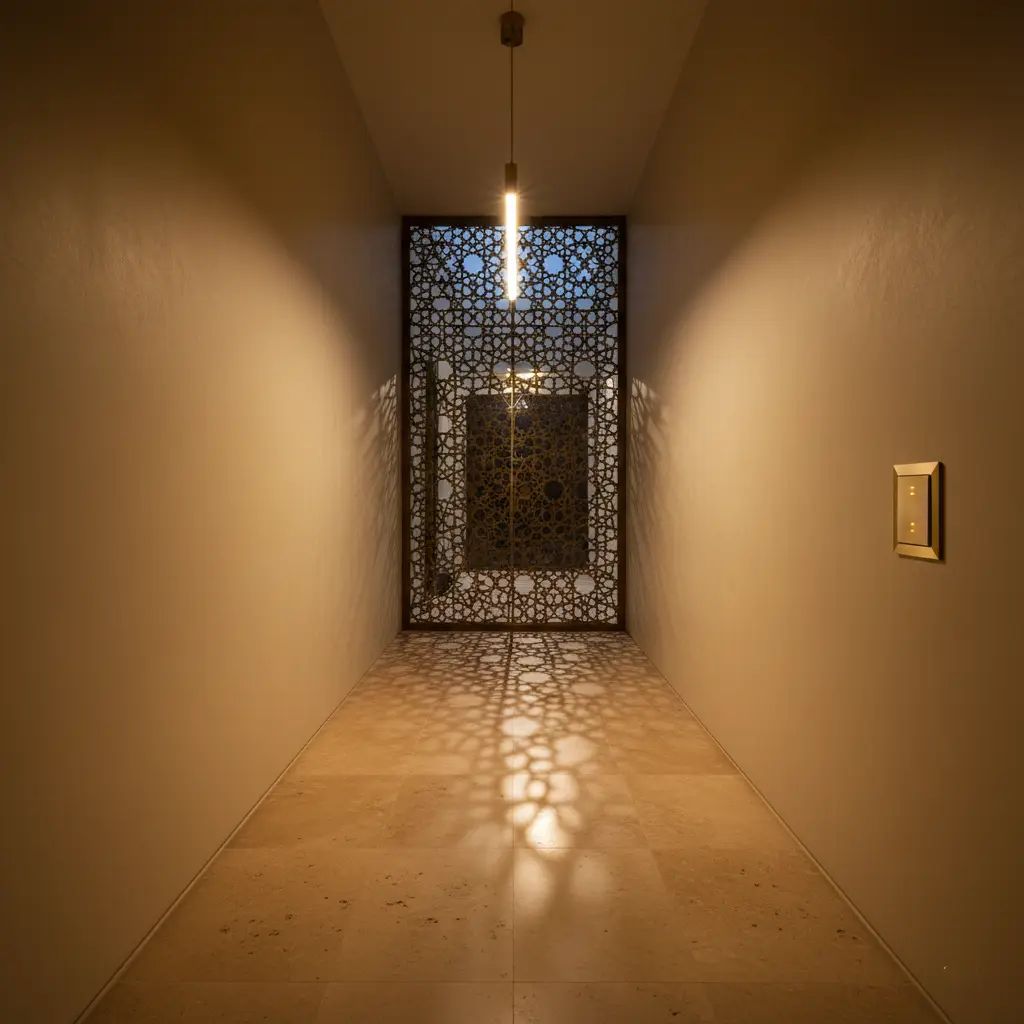
A villa in Dubai is plastered, painted and handed over. Six months later the owner wants a keypad moved, or a new sensor in the majlis, and discovers there is no bus cable within reach. The wall is now finished stone. This is the most expensive small mistake in home automation, and it is made on the day the cable was pulled.
If you are specifying KNX control cable Dubai villas will rely on for decades, the decision looks trivial. It is one thin cable. In practice it carries the power and the data for every wall panel, sensor and actuator in the house, and it is the only part of the system you cannot upgrade later without opening walls.
What a KNX Control Cable Dubai Villa Actually Carries
KNX twisted pair uses a dedicated bus cable. According to KNX Association material, the cable is 0.8 mm in diameter and solid-core, and it comes in single-pair and two-pair versions. The red and black pair carries both power and data at 29 V DC. The yellow and white pair is an optional extra connection that is generally left unused.
Because the signalling is balanced and differential, interference that lands on both cores tends to cancel out. That is a large part of why a wired bus holds up well in a house full of other electronics. KNX describes twisted pair as its most established medium, with more than 8,000 certified products from more than 500 manufacturers.
Three Numbers That Decide the Layout
Three figures come up on every plan.
350 metres. The maximum cable distance between the power supply and any device on a line.
1,000 metres. The maximum total bus cable on a single line.
21 to 30 V DC. The window in which each device must operate. Every connection and every metre of cable costs a little voltage, and the last device on a long, heavily loaded run is the one that misbehaves first.
A line can stay well inside the length limits and still sit uncomfortably near the voltage window if the cable is thin, the joints are poor, or too many devices hang on one supply. Each device draws current, and KNX Association's worked examples show a long, heavily loaded run losing voltage quickly. Cable quality is not a luxury. It is how the bus stays inside its operating window.
Why Certified Cable Beats a Substitute
KNX Association material notes that other cables can work in a pinch, and then concludes that KNX-certified cable is always the right choice. We agree, for a plain reason: the cable is buried, and the cost difference is small against the cost of finding a fault behind plaster.
A thinner substitute carries more resistance, so voltage drops faster along the run. Flexible cable needs an extra joint at each keypad, which adds points that can fail. Both problems show up months after handover, not on commissioning day.
Layout: Where the Cable Goes
Cable is run to every place a device might ever live, not only to the places a device lives today. Our practice is to pull to each wall panel position, each sensor location, each distribution board, and to a few extra locations in rooms where the use is likely to change, such as a study that becomes a nursery.
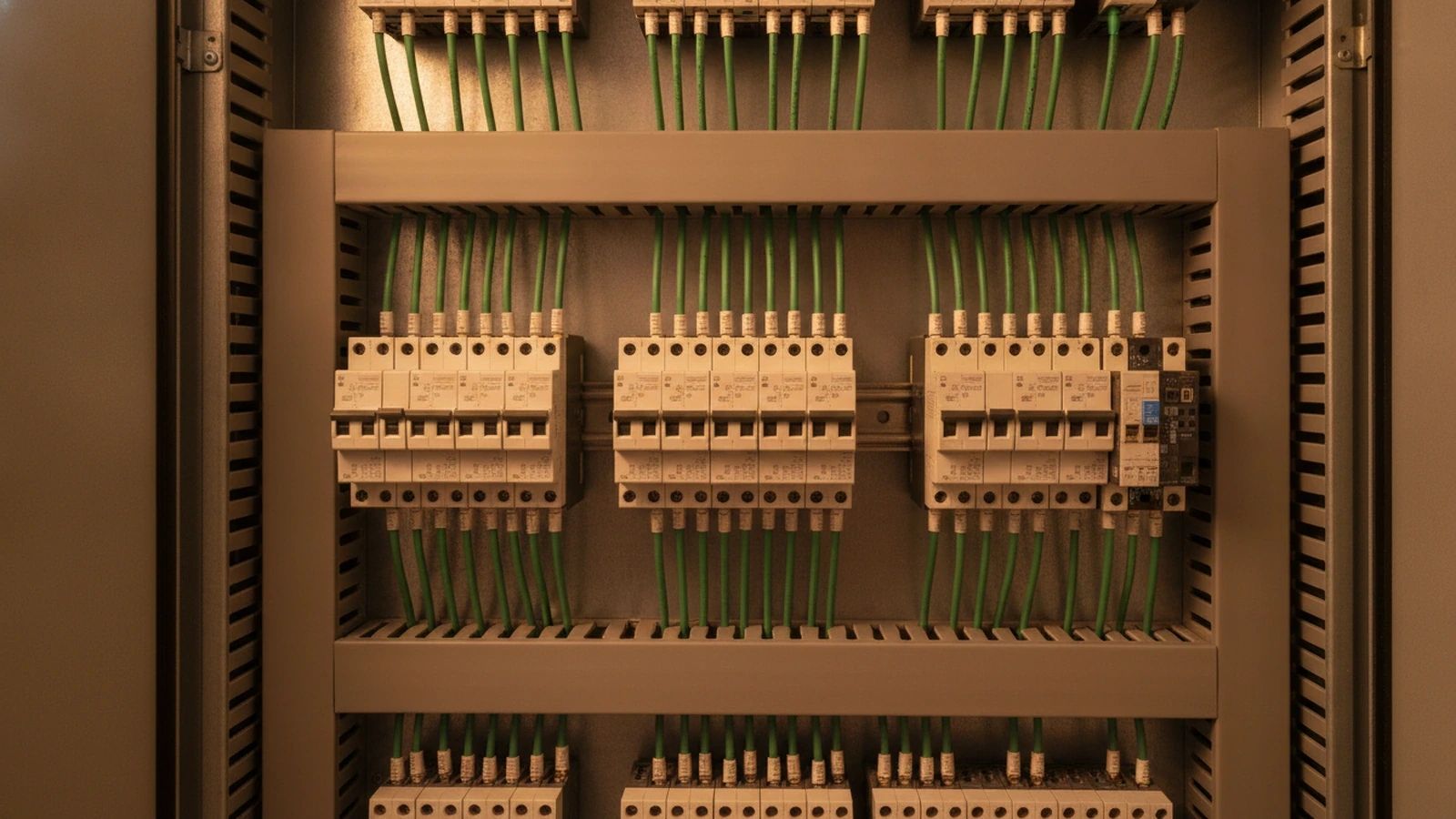
We also draw the bus as a clean daisy chain or star, keep every route recorded on a plan, and label each end. A recorded route is what lets a technician diagnose a fault in minutes instead of opening walls. We do not close a loop on the bus at any point, and we give each line its own KNX power supply in the distribution board. The related question of what happens above the cable, in the design, is covered in KNX versus WiFi smart home in a Dubai villa.
What to Ask Your Installer
Ask which cable is specified and whether it is KNX certified. Ask for the bus layout on a drawing, with the number of lines and where each power supply sits. Ask how many spare cable points are being provided and where. Ask whether the cable plan is part of the handover documents, so a future technician can read it. Three clear answers tell you more than any brochure, and the same questions are a good test when choosing a KNX installer in Dubai.
How We Handle It at Haus Logic
We specify certified KNX cable on every project and treat the cable plan as a deliverable, not a by-product. The bus drawing, the line and power supply layout, and the spare points are agreed before first fix, and they travel with the handover pack. On a villa in a community such as Emirates Hills this is the plan that keeps the VRF and lighting integration serviceable years later, and the same approach sits behind our finished installs, such as the JVT villa case study, and our lighting automation and climate automation work. For the broader sequence of decisions, see villa automation scope and sequence in Dubai.
If you are curious what a cable plan would look like for your villa, we are happy to walk through it.
Sources
1. KNX Association, Trade Talk: KNX Twisted Pair, it's not just a little piece of wire. https://www.knx.org/news/trade-talk-knx-twisted-pair-its-not-just-little-piece-wire
2. KNX Association, KNX Technology: transmission media. https://www.knx.org/knx-technology