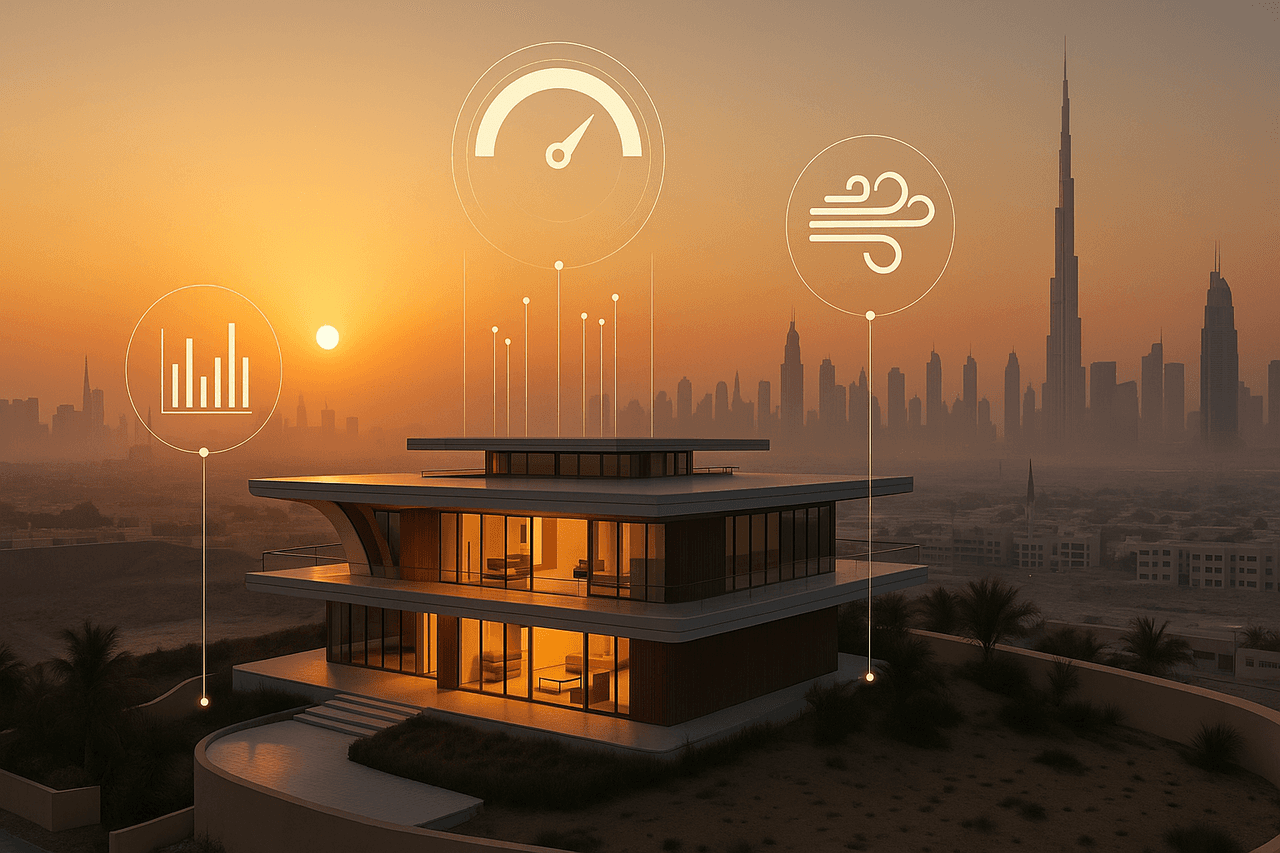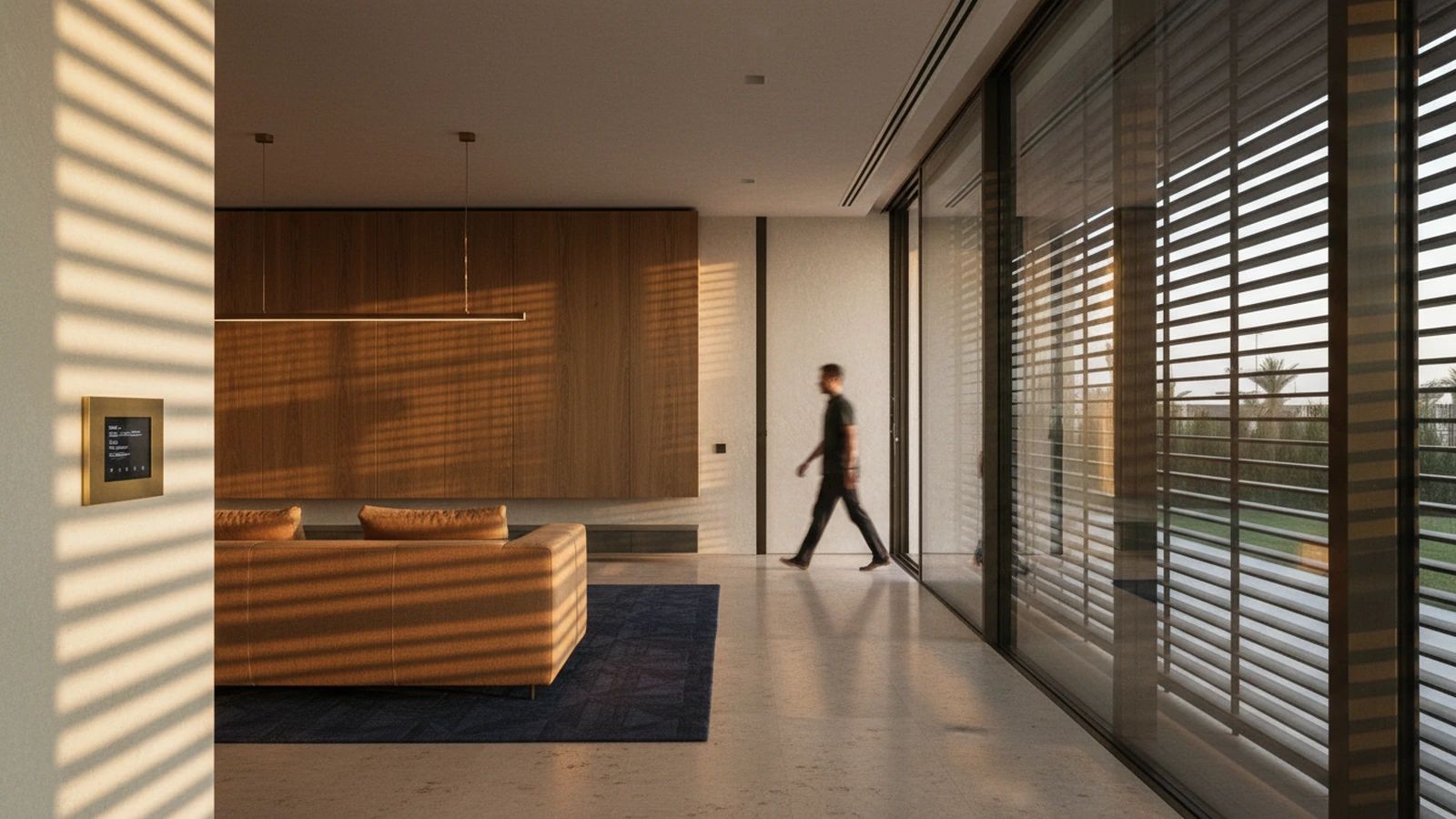
You are sitting with the consultant on a Friday morning in Dubai, looking at the cable schedule for a villa that is six months from handover. The lighting and HVAC are going onto KNX. The cameras are IP. The audio is on its own VLAN. Halfway through the conversation someone asks the question everyone wants to skip: in ten years, when half of this stack has been replaced, will the part we are paying the most for still be useful?
This is the question KNX IoT is meant to answer, and it is the reason the KNX Association used May 2026 to put two strategic pieces back to back in front of the industry.
What KNX IoT actually is
KNX IoT is not a new product line, and it is not a replacement for the KNX you already know. It is an extension. The KNX Association describes it as adding IPv6 to the existing transport methods that KNX already supports: twisted pair (TP), wireless (RF), and KNXnet/IP. The classic backbone is unchanged. The new layer rides on top, on the same structured ethernet cabling almost every modern Dubai villa already has run for cameras, access points, and TV. (KNX Association, 2026-05-19)
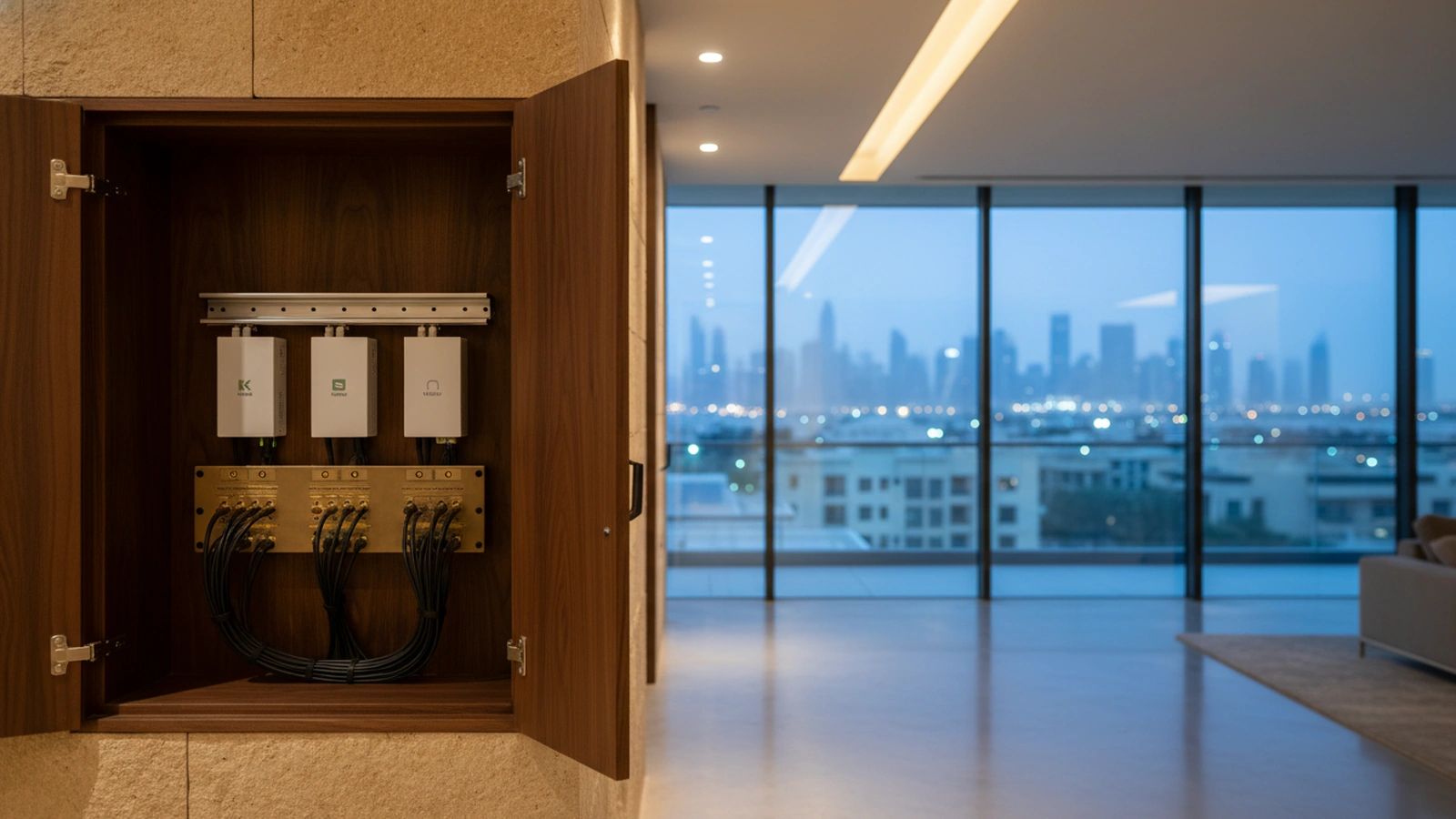
The important detail for a villa owner is what KNX IoT does NOT require. It does not require a parallel cabling run. It does not require a new commissioning tool. KNX IoT devices are configured in ETS, the same software your integrator already uses for the rest of the installation, with no new training and no learning curve. From the installer's chair, a KNX IoT actuator is a KNX device that happens to live on the IP network. (KNX Association, 2026-05-19)
That continuity is the whole point. KNX has 30+ years of installed base, and the people who design and commission these systems are not going to learn a different protocol because a manufacturer decided to ship one. KNX IoT extends the standard outward, not sideways.
Why May 2026 mattered
On 2026-05-18, the KNX Association published a strategy piece titled "KNX's evolution: Simplicity, innovation, sustainability and the power of community". The headline was a three-pillar restatement of where the standard is going: simpler operations, AI plus IP-based KNX IoT as the innovation track, and a sustainability focus aimed squarely at the systems that move energy around a building (EVs, photovoltaics, heat pumps, batteries). (KNX Association, 2026-05-18)
One day later, on 2026-05-19, the same association published "KNX IoT: the next evolution of KNX", a technical-flavoured piece that filled in what the innovation pillar actually means at the cable level. (KNX Association, 2026-05-19)
Two pieces in two days from the standards body is not coincidence. It is what a roadmap announcement looks like when the people behind a 30-year wired standard are telling integrators and owners that the IP direction is locked in. For a villa being designed right now, in Dubai, this is the signal that should shape the cable schedule.
Where KNX IoT hits a Dubai villa specifically
Three places matter.
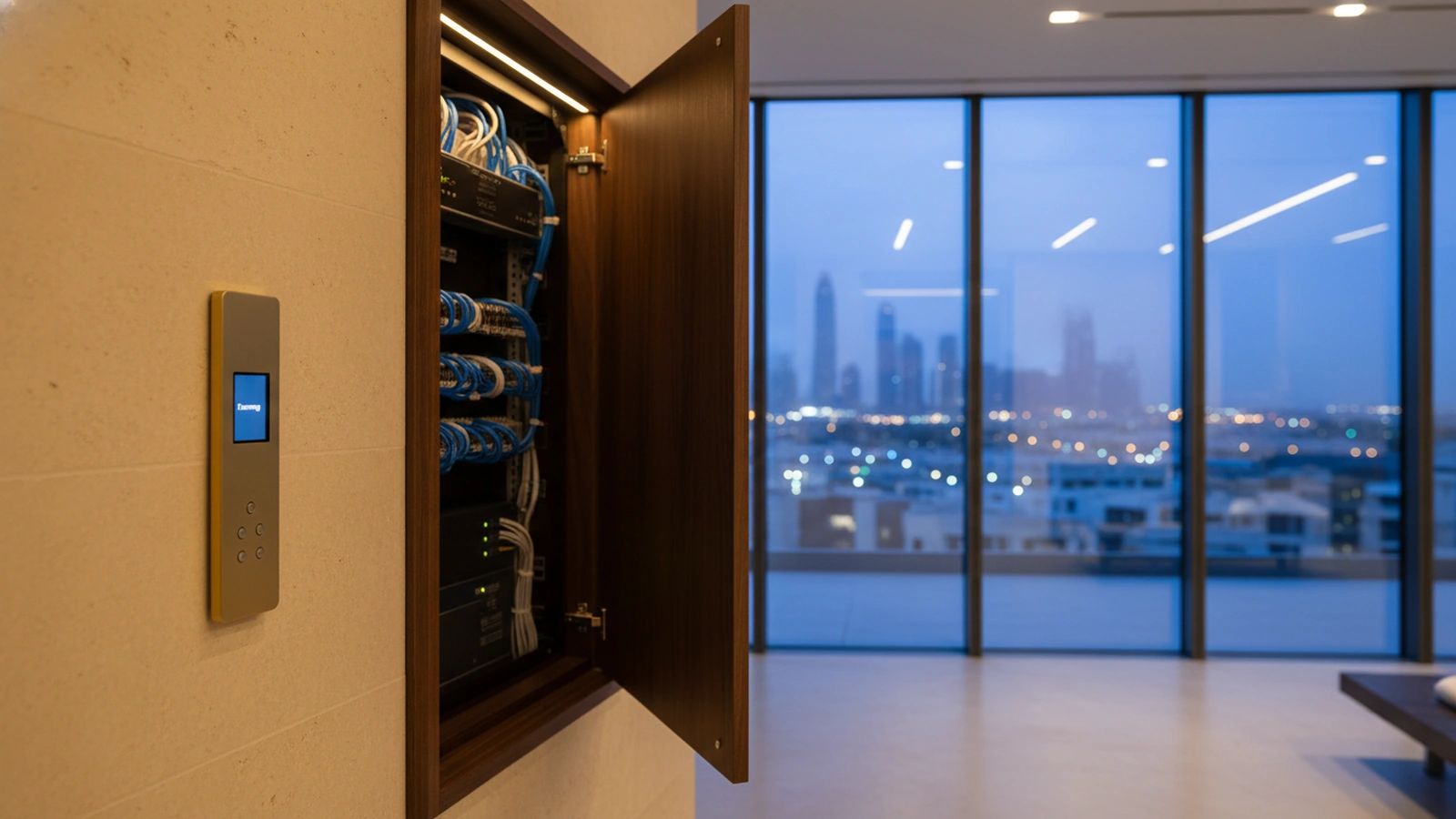
First, the structured cabling. Almost every new Dubai villa is wired with Cat6A or Cat7 to every room, often two drops per room, because the cameras and the access-point coverage are now non-negotiable. KNX IoT can use that same cabling. The villa does not need a parallel KNX cable run on every floor; the IP backbone you are already paying for becomes a transport for KNX devices that need it. (KNX Association, 2026-05-19)
Second, the cloud question. KNX IoT makes integration with cloud services easier, because it speaks the same IP that the rest of the internet does. The KNX Association calls out hosted management, AI functionality, and online analysis tools as the application surface. The upside is real. The discipline is to choose which services you want to integrate with on your terms, not to wake up in five years inside a vendor ecosystem you cannot leave. KNX's strength has always been that you can layer cloud functions on top without giving up local control; KNX IoT preserves that. (KNX Association, 2026-05-19)
Third, the longevity. Dubai villas are not cheap to wire and not cheap to retrofit. If the question on Friday morning is whether the lighting, climate, blinds, and access layer will still be supported in ten years, KNX IoT is the answer that says yes; the standard is being extended in the direction the rest of the building stack is going, not abandoned. The same longevity logic underpins what smart home automation does to your Dubai villa's value in 2026: the parts of the system that survive a decade are the parts a buyer pays for.
A four-stage ladder for villa owners
We see this as four progressive stages. Where you sit on the ladder depends on the project's scope and the cable plan.
Stage 1, Classic KNX backbone. Twisted-pair KNX runs the lighting, blinds, climate, and scenes. ETS is the source of truth. This is the baseline; it is what every well-designed Dubai villa has had for the last decade.
Stage 2, Hybrid with RF. Some rooms (retrofit additions, garden rooms, gatehouse) come in over KNX RF where pulling a TP cable is impractical. Same protocol, same ETS, same actuator behaviour.
Stage 3, Visualisation and remote access via KNXnet/IP. A KNXnet/IP gateway exposes the bus to a dashboard, to remote access via VPN, and to integrations with the audio, video, and access systems. Most owners with a custom Haus Logic dashboard are already living at this stage; this is also the layer that makes pre-cooling a Dubai villa and other multi-system routines worth the effort.
Stage 4, KNX IoT. Selected devices speak IPv6 directly on the structured cabling. Cloud services (analysis, AI-driven optimisation, hosted management) can be added without giving up local control. ETS still commissions everything. The IP layer extends what the bus can carry, not what controls it.
The right stage for a villa is the one that matches its scope and its owner's appetite for integration. A small apartment refit may live happily at Stage 1. A 12,000 square foot Emirates Hills villa with PV, batteries, EV charging, and a dashboard layer probably belongs at Stage 4 from day one.
Where this matters less
If you are not adding anything to the building's energy stack, KNX IoT is a future-proofing investment, not a today-saving one. It does not change how the lights come on, and it does not change the comfort experience. A villa with no PV, no batteries, no heat pump, no EV charger, and no appetite for cloud analysis can live on Stages 1 to 3 for a decade and lose nothing.
The 2026 strategy piece is candid about where the heavy lifting is: energy. KNX is leaning hard into PV, heat pumps, batteries, EVs, and the orchestration of those assets. If your villa has any of these, or is being designed against the Al Sa'fat 2.0 envelope and energy targets that are now mandatory in Dubai, KNX IoT becomes the layer that makes them talk to each other without locking you into one manufacturer's portal. (KNX Association, 2026-05-18)
What to do next
Three things, in order.
Confirm with your integrator that the cable plan supports Stage 4 even if you do not commission it today; that is mostly a question of running structured ethernet to the right places.
Ask which of your existing or planned KNX devices are already KNX IoT-capable, and which are TP-only. The two coexist on the same installation, but knowing the mix shapes the upgrade path.
Decide, deliberately, which cloud services (if any) you want this villa to depend on. KNX IoT makes the integration easier; that does not mean every service should be turned on by default.
If you want a second pair of eyes on the cable schedule, the actuator selection, or the IoT layer for a villa being designed or retrofitted right now, we can walk through it with you. Our KNX installation and commissioning page shows how we run that process end to end.